Intro
A few years ago, I used to think of Pinterest as little more than a mood board for home décor or cooking recipes. A place where people pin pretty pictures without really looking to go any further. Then I started digging deeper, observing how certain content creators were building a solid audience, steady traffic, a real community… using this platform alone. I realized I was missing out on something important.
What sets Pinterest apart from other networks is its fundamentally different nature. People don't come here to scroll passively or check what their friends are up to. They arrive with intention: to search, plan, and discover. These are active users in "I want to learn or do something" mode. And that's precisely where a golden opportunity lies for bloggers, creators, and small businesses.
But to take advantage of it, you need to speak the right language. And that language is the language of keywords.
Finding the right keywords on Pinterest: The key everyone underestimates
On Pinterest, SEO works differently from Google, but it remains just as crucial. Every pin, every description, every board title needs to be crafted to match what users are actually searching for. The problem? Identifying the terms people genuinely type into the platform isn't always intuitive.
That's where a Pinterest keyword suggestion tool becomes a true strategic ally. Rather than guessing or fumbling around, you get direct access to platform data to understand what your audience is looking for, how they phrase their queries, and which content angles hold the most potential. It completely changes how you approach content creation for Pinterest.
Creating content that truly resonates
Once you've identified the right keywords, content creation takes on a whole new meaning. You're no longer creating in a vacuum, hoping someone stumbles across your pin by chance. You're responding to existing demand, positioning yourself exactly where people are already searching.
Let's take a concrete example. If you run a productivity blog, you might be tempted to create pins around generic terms like "organization" or "time management." But with a thorough Pinterest keyword analysis, you might discover that users are actually searching for "minimalist morning routine," "busy week planner," or "bullet journal for beginners." These are specific queries with clear intent and a far higher conversion potential.
The importance of consistency and regularity
Pinterest rewards active and consistent accounts. The platform's algorithm plays a long game: unlike Instagram, where a post quickly disappears from the feed, a well-optimized pin can keep driving traffic for months, even years.
This means that investing time in optimizing your pins from the start has a snowball effect. A great pin today can bring you visitors six months from now. And if you apply this principle across all your content, the accumulation becomes significant.
The All-in-One Platform for Effective SEO
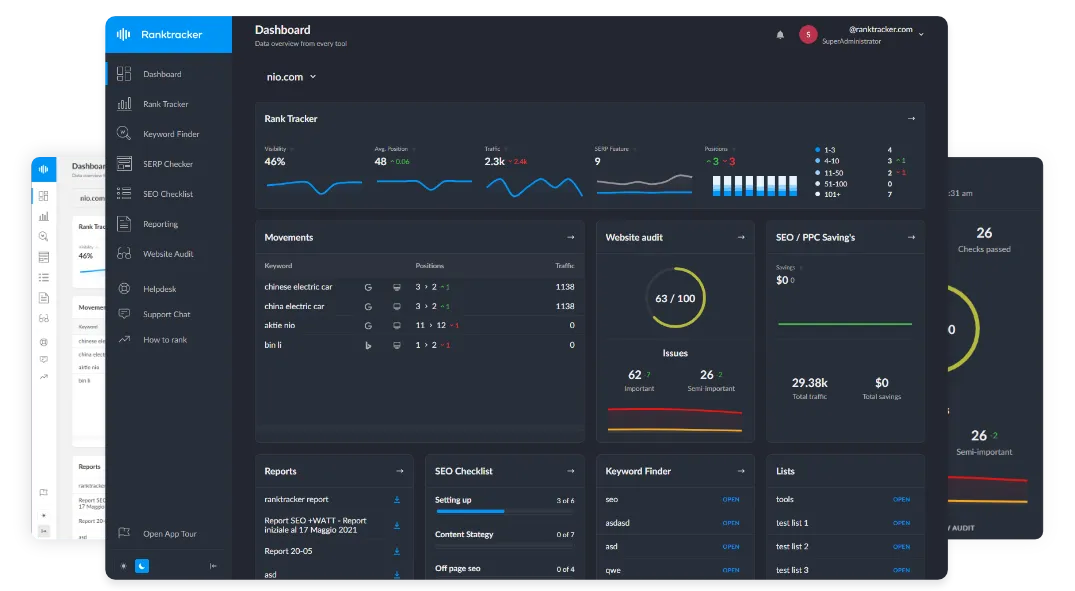
Behind every successful business is a strong SEO campaign. But with countless optimization tools and techniques out there to choose from, it can be hard to know where to start. Well, fear no more, cause I've got just the thing to help. Presenting the Ranktracker all-in-one platform for effective SEO
We have finally opened registration to Ranktracker absolutely free!
Create a free accountOr Sign in using your credentials
Consistency doesn't mean publishing frantically, either. On Pinterest, quality wins over quantity every time. It's far better to create five well-optimized pins per week than thirty rushed ones. Take the time to perfect your visuals, write keyword-rich descriptions, and organize your boards in a logical and appealing way.
Common mistakes to avoid
Many beginners on Pinterest make the mistake of treating the platform like a conventional social network. They post impulsively, without a strategy, and expect quick results. But Pinterest is closer to a visual search engine than a traditional social network.
Another frequent mistake is neglecting descriptions. Many users stick to eye-catching titles without tapping into the potential of the description field. Yet this is exactly where you can naturally weave in secondary keywords, briefly tell the story behind the pin, and encourage clicks.
Finally, many people underestimate the importance of well-structured boards. A board with a vague name like "My Favorites" tells the algorithm nothing. By contrast, "Quick Weeknight Dinner Ideas" or "Scandinavian Living Room on a Budget" send clear signals to Pinterest about the content you're offering.
Pinterest as a sustainable traffic source
What fascinates me most about Pinterest is this notion of lasting traffic. You're building something that endures, that grows steadily, and doesn't depend on a capricious algorithm changing the rules every other month.
Bloggers who have truly understood this, and who have taken the time to optimize their presence with the right tools, often describe a profound transformation in their traffic. Not a sudden explosion, but steady, predictable growth that eventually becomes their number one source of visitors.
If you haven't yet integrated Pinterest into your content strategy, now might be the time to seriously consider it. And if you're already using it without really thinking about keywords, start there. It's the foundation everything else is built on.