Intro
Most small businesses still plan their marketing in two separate columns: a digital budget for search, social and email, and a print budget for business cards, brochures and flyers. The two rarely talk to each other. The digital team optimises for clicks and conversions. Whoever handles print orders a run of collateral, hands it out at events or leaves it in-store, and moves on. Neither side really knows how the other is performing, let alone whether they're reinforcing each other.
This split is understandable, print and digital have historically been measured in completely different ways, but it leaves real value on the table. A well-designed print piece and a well-optimised digital presence aren't competing for the same job. They're doing different jobs that, done well together, add up to more than either one alone.
What “Integrated” Actually Means in Practice
Integration doesn't mean printing a QR code on a flyer and calling it done, although that's a reasonable starting point. It means designing the print and digital elements of a campaign as one connected experience from the outset, rather than bolting one onto the other after the fact.
A genuinely integrated campaign uses print for what it does best, physical presence, tactile trust, and a slower, more considered read, while using digital for what it does best, immediate action, measurement and iteration. The two aren't redundant copies of the same message. Print might introduce a brand and build credibility at a trade show, while the digital side captures the follow-up interest and closes the loop.
The Physical Advantage: What Print Still Does Better
It's worth being specific about why print still earns a place in the mix, because the case for integration only makes sense if print is pulling genuine weight. Physical materials get handled, kept on a desk, or passed to a colleague in a way a banner ad never will. A well-produced brochure signals a level of investment and permanence that a webpage, however polished, struggles to match. Business cards, in particular, still function as a trust signal at the moment of first contact, long after most people assumed they'd become obsolete.
None of this means print should be produced in isolation from the rest of a campaign. A custom printing company that understands how a piece will actually be used, handed out at a conference, mailed to a warehoused prospect list, or left in a retail counter display, can help shape the format and finish accordingly, rather than treating every job as a generic print run.
Building the Bridge: QR Codes, Custom URLs and Trackable Print
The most practical way to connect the two channels is also the simplest: give every piece of print a clear, trackable path back into the digital environment. A unique URL, a QR code linked to a dedicated landing page, or a promo code specific to that print run all do the same job, they tell you that a physical object led to a digital action.
This matters because it's the only way to answer the question every integrated campaign eventually faces: did the print spend actually contribute anything? Without a tracking mechanism, print performance becomes a matter of guesswork and anecdote. With one, it becomes a data point that sits alongside every other channel in a campaign report.
Matching Print Collateral to the Rest of the Campaign
Consistency between print and digital assets is often underrated as a performance lever in its own right. When a business card printing services order matches the same visual language, colours and messaging as the website someone lands on after scanning it, the experience feels deliberate rather than disjointed. When it doesn't, the mismatch quietly undermines trust, even if neither piece is individually bad.
The same logic applies at a larger scale. A brochure printing services order produced for an event should echo the campaign landing page it points to, not just in logo placement but in tone, offer, and call to action. Campaigns that get this right treat the print piece as the first paragraph of a story that the digital experience finishes, rather than as a separate advertisement competing for attention.
Measuring What Print Alone Can't Tell You
One of the quieter benefits of integration is what it does for measurement across the whole campaign, not just the print component. Once a print piece is driving traffic to a specific landing page or promo code, that data feeds back into broader analytics: which events generated the most qualified leads, which print formats converted best, and where the spend is actually working.
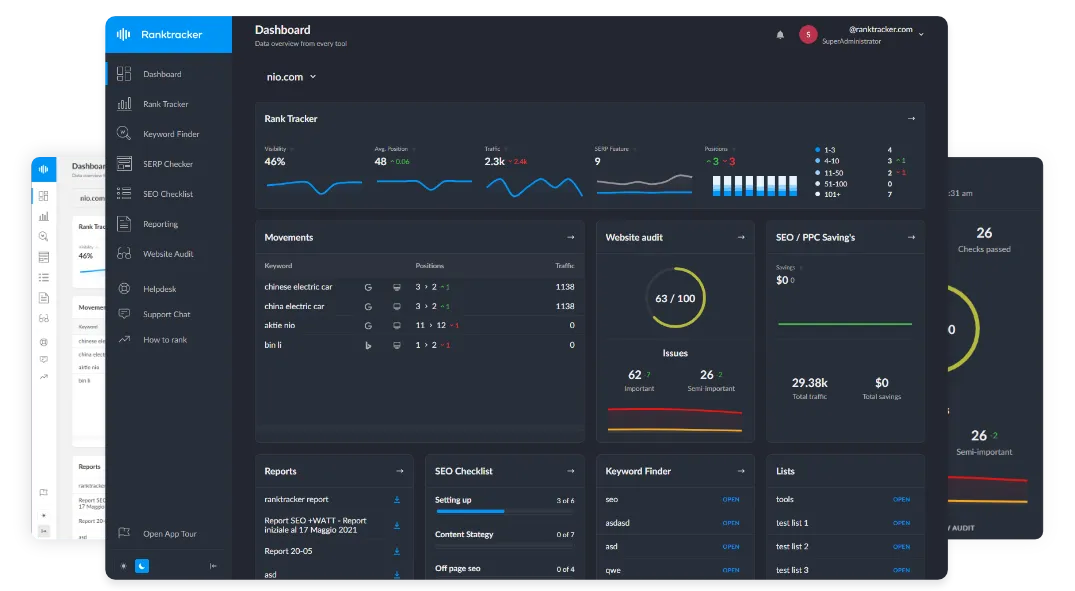
The All-in-One Platform for Effective SEO
Behind every successful business is a strong SEO campaign. But with countless optimization tools and techniques out there to choose from, it can be hard to know where to start. Well, fear no more, cause I've got just the thing to help. Presenting the Ranktracker all-in-one platform for effective SEO
We have finally opened registration to Ranktracker absolutely free!
Create a free accountOr Sign in using your credentials
This is also where search visibility becomes relevant. A campaign landing page built to receive traffic from a print piece is, structurally, still a webpage that needs to be found and to perform once someone lands on it. Keeping an eye on how that page ranks, loads, and converts is part of understanding whether the integrated campaign worked, not a separate concern from the print side of it.
Common Mistakes When Combining Print and Digital
A handful of avoidable mistakes show up repeatedly in campaigns that try to bridge print and digital. Most come down to treating one channel as an afterthought to the other, rather than planning both from the same starting point. The most common ones are worth calling out directly:
- **Treating the QR code or URL as an afterthought. **Added at the design stage without a clear landing page or offer waiting on the other end, a print piece that leads to a generic homepage wastes the moment of attention print earns.
- **Getting the timing out of sync. **Print runs that arrive weeks after the digital campaign has already launched, or a landing page that goes live after the print piece has already been distributed, both break the connection between the two channels.
- **Ordering the wrong format for the job. **A business card is not a brochure, and a brochure is not a flyer. Each serves a different moment in the customer journey, and using the wrong one undercuts the message before the digital side ever gets a chance to follow up.
- **Skipping measurement entirely. **Without a tracking mechanism attached to the print piece, there's no way to know whether it actually contributed to the campaign or just added cost.
A Simple Framework for Planning an Integrated Campaign
A useful starting discipline is to map each piece of print collateral to a specific digital destination before a single design file is created. For every business card, brochure or flyer in the plan, there should be a clear answer to three questions: what page will someone land on, what action are they expected to take there, and how will that action be measured. If any of those three answers is missing, the print piece is likely to underperform regardless of how well it's designed or printed.
This framework also helps allocate budget more sensibly. Formats that can be tied clearly to a measurable action, a trade show handout linked to a specific landing page, for instance, justify continued investment based on real data. Formats that can't be tracked at all should still have a place in the mix for brand and credibility reasons, but shouldn't be expected to carry the same reporting weight as the trackable pieces.
Why This Matters More for Small Businesses Than Big Brands
Large brands can afford to run print and digital as separate departments with separate budgets and still absorb the inefficiency. Small and medium businesses generally can't. Every print run represents a meaningful chunk of a limited marketing budget, which makes it far more important that each piece is pulling its weight and contributing something measurable back into the rest of the campaign.
This is also where the case for integration becomes more practical than theoretical. A small business doesn't need a large martech stack to connect print and digital, it needs a habit: before ordering any print collateral, deciding where it points, what happens when someone gets there, and how that will be checked afterwards. That habit costs nothing beyond a bit of planning time, and it turns every print order into a source of feedback rather than a one-way expense.
Getting Started
None of this requires an overhaul of how a small business already handles its marketing. It starts with treating the next print order as part of the same campaign as the website, rather than a separate task ticked off a list. Businesses ordering through online printing services already have the infrastructure to make this straightforward, since digital ordering and proofing tools sit naturally alongside the kind of tracking and landing page work integration requires.
The businesses that get the most out of their marketing budget aren't necessarily the ones spending more on either print or digital. They're the ones that stopped treating the two as competing line items and started designing them as a single, connected experience for the person on the receiving end.