Intro
For years, marketers had a pretty clear answer to “Are we visible in search?” You checked keyword rankings, traffic, backlinks, impressions and click-through rates.
Then AI search quietly changed the question.
ChatGPT, Google’s AI Overviews and AI Mode, Claude, Gemini, Perplexity and similar AI tools have become part of how people search for information, compare options and ask for recommendations.
This doesn’t mean the past decade of SEO work was wasted. Keywords, quality content, backlinks, technical performance and a well-structured website still matter. What has changed is the environment in which that work is being discovered.
That is why AEO, AIO and GEO and a growing pile of other abbreviations have suddenly appeared everywhere. Strip away the terminology, though, and the goal is simple: increase the chances that AI mentions your brand, recommends it or cites your website. For a deeper dive, DesignRush has a useful overview of how answer engine optimization differs from traditional SEO.
The All-in-One Platform for Effective SEO
Behind every successful business is a strong SEO campaign. But with countless optimization tools and techniques out there to choose from, it can be hard to know where to start. Well, fear no more, cause I've got just the thing to help. Presenting the Ranktracker all-in-one platform for effective SEO
We have finally opened registration to Ranktracker absolutely free!
Create a free accountOr Sign in using your credentials
So, how do you know whether that is happening?
AI Search Is a Conversation, Not a Single RankingAI Search Is a Conversation, Not a Single Ranking
Traditional search gives you a little box and basically says, “Here you go, pick the right keywords.” With AI, search is a conversation. You can add context, explain what you need and keep refining the question until you get closer to the answer.
Imagine you’re looking for a productivity platform for a small remote team you’re leading. Your first question might be:
“What are the best project management tools for a 20-person remote team?”
An AI system might recommend several familiar platforms, explain what each one does and perhaps cite product pages, comparison articles and review sites.
But the conversation rarely ends there.
Then you might add:
The All-in-One Platform for Effective SEO
Behind every successful business is a strong SEO campaign. But with countless optimization tools and techniques out there to choose from, it can be hard to know where to start. Well, fear no more, cause I've got just the thing to help. Presenting the Ranktracker all-in-one platform for effective SEO
We have finally opened registration to Ranktracker absolutely free!
Create a free accountOr Sign in using your credentials
“Our budget is $10 per user per month.”
Now the answer can change. Suddenly, pricing pages matter.
Then you remember:
“We also need Slack integration.”
Now, platforms with a documented Slack integration may move up, while others may disappear entirely.
And that is the fundamental difference from traditional keyword rankings. There isn't one static query called “best project management tools” with ten fixed positions. There is a chain of increasingly specific questions, and every new piece of context can change which brands, pages and sources appear in the answer.
You’re also no longer the only one shaping the narrative AI picks up. Reviews, forums, comparison sites and other third-party sources can all influence what it says about your brand. That creates a frustrating measurement problem: you cannot search your brand once and declare victory.
So how do you improve something you cannot consistently see?
You track the right metrics and KPIs.
How to Track AI Search Visibility
There are two practical approaches: manual and automated tracking.
Manual tracking is the simplest place to start. Create 20 to 50 questions around your products, services, brand and expertise, then run the same prompts through the AI platforms. Track whether you appear, where you appear, which competitors show up and which sources AI cites.
The All-in-One Platform for Effective SEO
Behind every successful business is a strong SEO campaign. But with countless optimization tools and techniques out there to choose from, it can be hard to know where to start. Well, fear no more, cause I've got just the thing to help. Presenting the Ranktracker all-in-one platform for effective SEO
We have finally opened registration to Ranktracker absolutely free!
Create a free accountOr Sign in using your credentials
But don’t only ask questions you know you can answer. Throw in a few about things you don’t offer or topics you barely mention on your site. They can show you where AI loses track of your brand, gets it wrong or hands the conversation to a competitor.
This gives you a useful baseline and costs nothing. The downside is obvious: do this across 100 prompts and several platforms every week, and you’ve basically created yourself a second job.
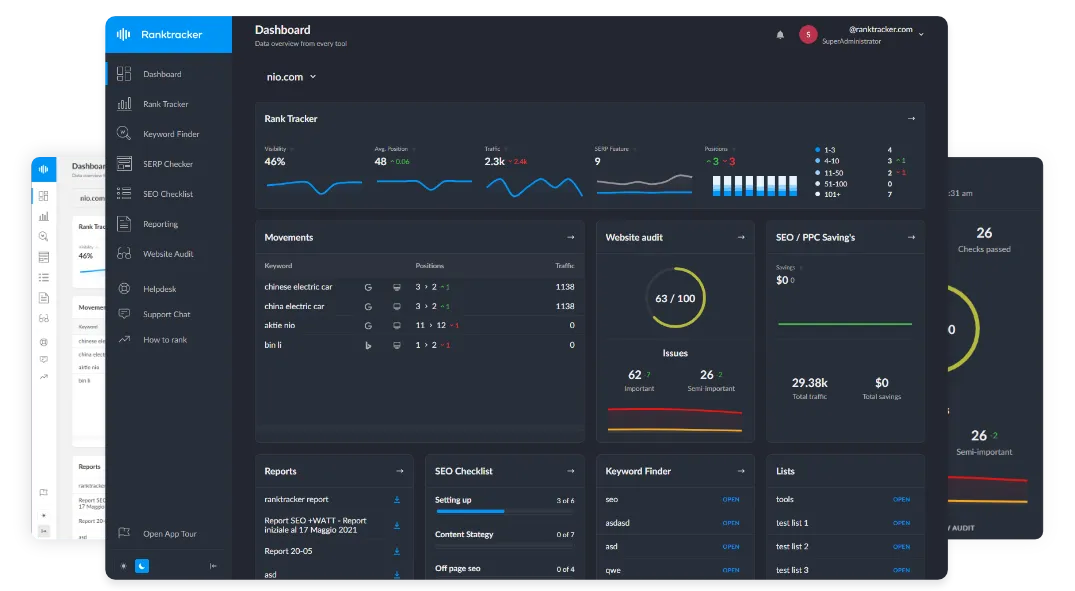
That is where automated AI visibility platforms come in. Tools such as Ranktracker, Ahrefs Brand Radar, Semrush AI Visibility Toolkit, OtterlyAI, Peec AI and Profound can monitor AI responses at scale, compare competitors, track citations and store historical data. Their coverage and formulas vary, so the numbers are best treated as consistent KPIs within a tool rather than universal industry standards.
The KPIs Behind AI Search Visibility

Prompt Coverage and Retrievability
These answer a basic but important question: can AI find and surface your brand when it matters? Prompt Coverage measures how often you appear across a set of relevant questions. Retrievability goes a step further, looking at how easily your brand can be found and connected to the topics, products or expertise you want to be known for.
Brand Presence and Mentions
Brand presence looks at how consistently your brand appears across relevant AI answers, while Brand Mentions gives you the raw count. Context matters, though. A recommendation, a comparison and a passing reference aren't the same thing, so tracking the surrounding language can tell you more than the number alone.
AI Ranking and Position
When an AI answer lists several brands, position becomes the closest equivalent to a traditional ranking. Average Position shows where your brand tends to appear when it is mentioned. Just remember that being first in a handful of answers doesn't necessarily tell you much about your overall visibility.
Sentiment and Context
AI doesn't just decide whether to mention your brand. It can also describe it in a particular way. Sentiment analysis can help track whether those mentions are broadly positive, neutral or negative, while the surrounding context shows what AI is actually associating with your brand.
Citations and Citation Quality
A mention tells you the AI knows your brand. A citation tells you which source is supporting the answer. Citation Share measures how much of the relevant citation footprint belongs to your domain compared with other sources. Citation Quality adds another layer: are those citations coming from your own useful pages, reputable third-party publications, reviews, directories or less valuable sources?
AI Referral Traffic
Not every AI interaction ends with a click, but some do. AI Referral Traffic tracks visitors reaching your site from AI platforms and can help connect visibility with actual website activity.
Share of Voice and Competitor Visibility
Share of Voice adds the competitive layer. If you appear in 30% of relevant AI responses, that number means more when you know how often competitors appear in the same set of prompts. Track the same metrics for rival brands to see where they show up while you are absent and which sources consistently support them.
Source Diversity
AI answers draw from a wider ecosystem than your own website. Source Diversity measures the range of domains appearing across your tracked prompts. If the same publications, directories, review sites or industry resources keep appearing, they may point to useful citation and digital PR opportunities.
Historical Trends
One AI answer is an anecdote. A trend is evidence. Track your KPIs over time and compare changes against content launches, digital PR campaigns, technical improvements, competitor activity and major changes in AI search products.
AI Visibility Score
Some platforms combine several signals into a single Visibility Score. That can be useful for a quick dashboard view, but treat it as a summary rather than the definition of AI visibility.
Measure the Signals, Not Just the Buzzword
AI search has created an entirely new vocabulary, but measuring it does not have to become complicated.
You may no longer be tracking only where a page ranks, but the practical questions still matter: Are we appearing for the questions our customers care about?