
Intro

Retro gaming gives crypto brands a shortcut to understanding without dumbing the subject down. A pixel coin, a cartridge, or an old save file can turn a cold technical concept into something the reader already has a feeling for. The useful part is not the nostalgia itself. It is the way nostalgia makes new behavior feel less strange. For marketers, this matters because comprehension often starts with mood before it becomes knowledge, and the right memory can make a complex product feel less distant faster.
The Familiar Past Can Teach the Technical Present
Nostalgia works best when it does more than decorate a campaign. It carries memories of rules, rewards, progress, ownership, and repeated learning. A 2026 Frontiers in Communication study on retrostyling as a historical narrative strategy explains how retro visual codes can connect past and present in brand communication. For crypto brands, that connection matters because blockchain terms often arrive before the audience has a mental model for them. Retro gaming gives marketers a shared language before the explanation begins.
From Pixel Memory to First Action
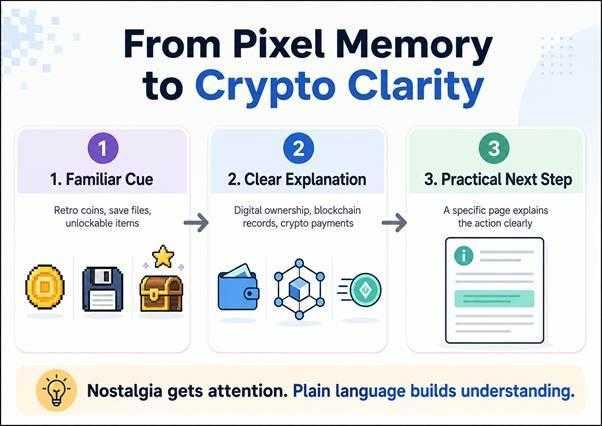
The strongest crypto entertainment journeys separate two jobs: make the idea approachable, then make the next action clear. A brand can use retro gaming to invite recognition, but the page that follows still has to explain what the user is looking at, what the first action involves, and which details shape expectations. A first deposit bonus page is a practical example of that shift because it names a specific starting offer, explains the 100% first deposit match, mentions 100 free spins, and makes it clear that the bonus match is capped at 1 BTC. In that sense, the first deposit bonus is not just a reward label. It is an action-specific information page where brand familiarity, crypto payment context, and offer clarity meet.
The reader can move from the warm recognition of digital coins and game-like progress into a more exact understanding of what the platform is presenting, without needing exaggerated claims or technical overload.
A short brand introduction can make that transition easier to see. This welcome video combines pixel-powered nostalgia, old console references, digital coins, and blockchain education in just over a minute. It shows how a crypto entertainment brand can set a tone first, then let clearer pages carry the more specific information. That order keeps the experience readable: emotional familiarity at the start, practical understanding when the reader reaches the next step.
Why Nostalgia Needs Plain Language Beside It
Retro cues are effective because they compress a lot of memory into a small signal. A coin sound, a level-up frame, or an 8-bit character can suggest progress instantly. The problem begins when the metaphor is asked to do too much. A wallet is not a treasure chest. A blockchain record is not a save file. A token is not simply a game collectible. Those comparisons can open the door, but they should not become the whole explanation.
For content teams, the better approach is layered communication. Start with a familiar image, translate the modern idea, then remove the decoration when precision matters. A reader may understand digital ownership faster if it is first compared to owning an item in a game world, but the article still needs to say that blockchain uses distributed records to track ownership or activity. The familiar cue earns attention. The plain explanation earns trust.
| Retro cue | What it helps explain | Where clarity must take over |
| Pixel coins | Digital value can exist inside a system people recognize | Define the actual asset, payment, or platform action in direct terms |
| Save files | Progress can be recorded and returned to later | Explain that blockchain records are not personal game saves |
| Unlockable items | Digital access can feel meaningful and specific | Avoid implying every token or offer works the same way |
This is why the best nostalgia marketing for crypto brands feels restrained. It does not turn the whole page into a game script. It uses the past to reduce friction, then lets clear writing do the serious work. That balance is especially useful in search-led content, where readers want fast orientation. They may enjoy the retro hook, but they came to understand a term, compare a concept, or decide whether the page answers their question.
What Marketers Should Carry Forward
The lesson is not “add retro visuals.” The lesson is to choose memories that genuinely help the reader understand the modern behavior. Retro gaming is powerful because it already taught millions of people how digital rules feel: collect, store, trade, unlock, repeat, and progress. Crypto education can borrow that familiarity, but only when the borrowed memory points toward a real explanation.
The All-in-One Platform for Effective SEO
Behind every successful business is a strong SEO campaign. But with countless optimization tools and techniques out there to choose from, it can be hard to know where to start. Well, fear no more, cause I've got just the thing to help. Presenting the Ranktracker all-in-one platform for effective SEO
We have finally opened registration to Ranktracker absolutely free!
Create a free accountOr Sign in using your credentials
This also gives marketers a sharper content structure. Lead with the recognizable idea. Move quickly into the technical concept. Use a real page, video, or short example to show how the concept appears in context. Then close with the broader marketing point: familiarity should make learning easier, not replace learning. A useful related lens comes from research on digital content marketing, engagement, and brand attachment, which reinforces why clear, relevant content matters when brands want audiences to build lasting understanding.

