
Intro
If you sell technical services especially app or software development, you’ve probably noticed the language in your inbox changing. A few years ago, most inquiries were about "building an iOS and Android app" or asking, "How much does it cost to build a mobile app for X?" Today, the same buyers are asking for an AI agent to qualify leads, automate intake, or summarize client calls and update the CRM.
They still care about apps, but they’re not really buying screens anymore, they’re buying outcomes and automated workflows.
This post breaks down how to bring your SEO in line with that reality: how to audit the language in your pipeline, rethink keyword research around jobs, reposition your landing pages around specific agent use cases, build content hubs that support those pages, and measure whether this shift is actually bringing in better, more agent-focused leads.
The demand shift: from features and screens to workflows and outcomes
Image source: https://searchengineland.com/geo-rank-tracker-how-to-monitor-your-brands-ai-search-visibility-465683
What inquiries looked like 3–5 years ago
In the "app boom" years, typical requests were platform-first and feature-heavy:
- “We need an iOS and Android app for our customers.”
- “We want to build a companion app for our SaaS product.”
- “How much to build a mobile app like [well-known brand]?”
Discovery calls focused on:
- Native vs hybrid vs web.
- Tech stacks and integrations.
- Feature lists: logins, dashboards, push notifications, messaging, etc.
The assumption was simple: the app itself is the product.
What inquiries look like now
Modern conversations are increasingly outcome-first:
- “We’re losing hours a week to manual data entry. Can an AI agent handle that?”
- “We need something that automatically chases unpaid invoices and reminds customers politely.”
- “Our support team is drowning. Can we triage tickets with an AI assistant before they reach humans?”
Buyers don’t necessarily care whether the solution ends up as:
- An internal web app.
- An embedded agent inside an existing product.
- A workflow that connects several tools the team already uses.
What they care about is:
- Time saved.
- Errors reduced.
- Steps removed.
- Work that “just happens in the background.”
McKinsey estimates that generative AI and related automation technologies could technically automate 60–70% of the time employees spend on work activities today, especially in knowledge work and routine digital workflows.
That’s exactly the space where AI agents and automated processes live.
Why this matters for SEO
Search behavior tends to follow sales language. When prospects stop saying “build me an app” and start saying “set up an AI agent to do X,” their searches eventually change too.
If your site is still optimized only for:
- “mobile app development company”
- “custom app developers”
- “iOS and Android app development”
…you’re invisible at the exact moment buyers search for:
- “AI agent for support ticket triage”
- “AI assistant to automate onboarding emails”
- “workflow automation for intake forms and CRM”
Classic SEO is your site like a museum of old positioning is a good way to miss the next wave of demand.
Map the gap: auditing your current SEO against AI-first demand
The All-in-One Platform for Effective SEO
Behind every successful business is a strong SEO campaign. But with countless optimization tools and techniques out there to choose from, it can be hard to know where to start. Well, fear no more, cause I've got just the thing to help. Presenting the Ranktracker all-in-one platform for effective SEO
We have finally opened registration to Ranktracker absolutely free!
Create a free accountOr Sign in using your credentials
Image Source: https://www.searchenginejournal.com/ai-visibility-audit-questions-iqrush-spa/558015/
Before rewriting anything, you need to understand where reality and your website are out of sync.
Step 1: Listen to the language in your own pipeline
Start with what’s already in front of you:
- Sales and discovery call recordings.
- Contact form submissions.
- Inbound emails.
- Live chat logs and support tickets.
Create two simple columns:
- App-first language – mentions of “app,” “mobile app,” “iOS/Android,” “build an app like X.”
- Agent/automation-first language – mentions of “AI agent,” “assistant,” “automation,” “copilot,” “bot,” “workflow,” “back office,” “routine tasks,” etc.
Count them. Don’t guess. If a meaningful share of serious leads are already using agent/automation language, that’s your signal: your SEO and content should reflect it.
A practical way to do this is to tag calls or submissions in your CRM, then review a sample month. Even 20–30 high-intent leads is enough to spot whether the old “build me an app” pattern is fading.
Step 2: Compare pipeline language to your keyword and landing page strategy
Next, hold that language up against your current SEO setup:
- What are your core landing pages actually targeting?
- How many pages are still built entirely around “app development” phrasing?
- Do any of your main nav items or hero sections use the words your best leads are using now?
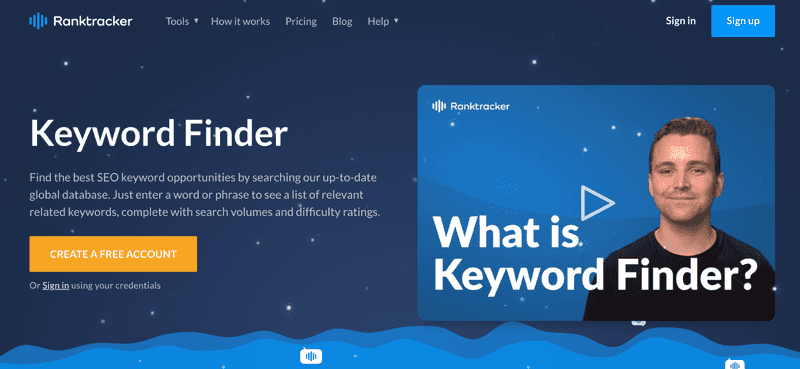
This is also the point where you bring in Ranktracker or your preferred SEO platform.
Use:
- Keyword Finder to see which variants of “AI agent” and “workflow automation” are already getting meaningful search volume in your markets.
- Keyword rank checker to see whether you accidentally rank for any of these terms already, even if you never planned for them.
- SERP Checker to inspect what kinds of pages currently win for those searches—are they tool pages, agency pages, or documentation?
You’re looking for evidence that search is starting to mirror the language in your pipeline.
Step 3: Identify the obvious mismatches
Some common patterns:
- You’re selling “AI-powered back-office automation,” but your main service page still says “Custom Mobile App Development” from 2018.
- Your team is building internal AI copilots for SaaS companies, but your site doesn’t even mention agents, assistants, or automation in headings.
- Prospects are arriving with automation language, but your blog only talks about native vs hybrid, frameworks, and mobile app trends.
Those gaps are your first targets.
If you want a deeper framework for this kind of audit, Ranktracker’s SEO guide and the newer GEO Playbook series are good references for structuring topics, entities, and clusters around evolving search behavior—not just legacy keywords.
Rethinking keyword research around jobs, not just “app development”
Traditional keyword sets for app dev services lean heavily on category labels:
- “mobile app development company”
- “custom app development”
- “hire app developers”
Those phrases are missing the growing pool of buyers who aren’t shopping for a “type of supplier”, they’re searching for a solution to a specific job.
Shift from service labels to jobs-to-be-done
Instead of thinking in terms of “we’re an app development company,” frame your research around:
- What job is the buyer trying to get done?
- What tedious workflow are they trying to eliminate?
For example:
- Old: “logistics app development company”
New: “AI agent to automate delivery scheduling,” “automate route assignment from orders,” “driver dispatch workflow automation.”
- Old: “healthcare app developers”
New: “intake form automation for clinics,” “AI assistant for medical note summaries,” “HIPAA-friendly AI agent for patient follow-up reminders.”
Build an AI-first keyword set from real complaints
Take the raw phrases from your pipeline and reshape them into search-friendly variants. Then, use tools like Keyword Finder to:
- Discover related long-tail queries that repeat agent/automation/assistant wording.
- Spot patterns by industry (healthcare, fintech, logistics, education, professional services).
- Group emerging terms: “AI agent,” “AI assistant,” “workflow automation,” “back office automation,” “internal copilot,” etc.
Rather than one giant bucket called “app development,” you’ll start to see clusters like:
- AI agents for lead qualification.
- AI agents for support and ticket routing.
- AI agents for internal documentation and research.
- AI agents for billing and collections.
Each of those clusters is a potential landing page and content hub.
The All-in-One Platform for Effective SEO
Behind every successful business is a strong SEO campaign. But with countless optimization tools and techniques out there to choose from, it can be hard to know where to start. Well, fear no more, cause I've got just the thing to help. Presenting the Ranktracker all-in-one platform for effective SEO
We have finally opened registration to Ranktracker absolutely free!
Create a free accountOr Sign in using your credentials
To keep this aligned with how generative engines and AI assistants choose sources, it’s worth studying Ranktracker’s pieces on agentic search and AI Optimization (AIO)—they show how AI agents increasingly select, not just list, brands when generating answers.
Repositioning your landing pages for AI-first intents
Once you understand the language and clusters, your service pages need to stop hiding behind vague “AI services” umbrellas, especially for companies offering ai agent development in UK and similar service-led markets.
Stop burying agents under generic “AI & ML” pages
A common pattern on technical services sites:
- One catch-all page for “AI & Machine Learning Services.”
- One catch-all page for “Automation and Integrations.”
None of that matches the way buyers actually search or think.
If your ideal prospect is literally typing “AI agent for onboarding new customers” into a search bar, a generic “AI & ML” page isn’t going to resonate—or rank competitively against more specific pages.
Create specific pages around clear jobs
You don’t need 100 pages. Start with a handful of high-value use cases that already show up in your pipeline:
- “AI agents for lead qualification and routing.”
- “AI agents for customer support triage.”
- “AI assistants for onboarding and training.”
- “AI agents for back-office billing and collections.”
For each page, structure it around the buyer’s world, not your stack.
A simple template:
- H1: Name the job clearly: “AI agent for [outcome].”
- Opening paragraph: Mirror the frustration and describe the outcome in plain language.
- What this agent actually does: Concrete tasks, not abstract AI jargon.
- Where it plugs into your stack: CRMs, ticketing tools, communication channels, internal systems.
- Typical results: Faster response times, fewer dropped leads, reduced manual work.
- Implementation and timeline: De-risk the project by showing there’s a clear path.
You can use Ranktracker’s SERP Checker to reverse-engineer pages that already win for “agent for X” style queries: what structure they use, how specific they get, and how they position outcomes vs technology.
Use real project patterns as proof
You don’t need to expose client names or sensitive details. Even anonymized patterns help buyers understand what’s possible:
- “A B2B SaaS company cut first-response time by 40% after deploying an agent to triage support tickets and surface suggested replies to human agents.”
- “A professional services firm automated 70% of their intake emails by connecting an agent to their forms and CRM; staff now only handle edge cases and approvals.”
These are the kinds of results already being reported in customer support and workflow automation case studies. They make it clear that “AI agent” is the next iteration of the automation work many dev teams have been doing for years.
Building content hubs around agent use cases (not just AI hype)
If your blog is still full of “Top 10 App Trends” pieces, this is your chance to pivot toward content that directly supports your new landing pages.
Anchor each hub to one specific agent type
Pick a few use cases that are already paying your bills and build hubs around them. For example:
- **Hub 1: AI agents for customer onboarding
** * Overview: what onboarding agents actually do (e.g., welcome flows, document checks, guided setup). * Deep dives by industry: SaaS vs fintech vs education. * Comparisons: agent vs static onboarding flows vs manual support. * Implementation guides: how to roll out without breaking your existing funnel.
- **Hub 2: AI agents for support and knowledge
** * Overview: support triage, FAQ handling, internal knowledge search. * Articles on training data, handoff rules, and escalation paths. * Case patterns: when agents help vs when they frustrate customers.
- **Hub 3: AI agents for internal ops and back office
** * Overview: billing, collections, reporting, data cleanup. * Industry slices: agencies, logistics, healthcare admin. * Guides on governance, approvals, and human oversight.
Use content to answer the questions your landing page can’t fit
Service pages should stay focused and commercial. The supporting content can:
- Explore edge cases and trade-offs (for example, when human review is mandatory).
- Compare different implementation models (in-product agent vs internal-only agent).
- Tackle objections openly (cost, data security, model accuracy, change management).
This is where you build trust and win long-tail queries around “should we,” “how to,” and “pitfalls.”
On top of that, you can align hubs with Ranktracker’s GEO Playbook and agentic search content: treat each hub as a semantic cluster that helps AI answer engines and search agents understand where you’re authoritative.
Tie hubs together with intentional internal links
Make it easy for both users and search engines to understand your structure:
- Link each article back to the core “agent for X” landing page.
- Cross-link between hubs where use cases overlap.
- Add clear "next step" CTAs that match the reader’s stage (exploring vs ready to scope).
- Use internal links to your own case studies, process breakdowns, and pricing explainers.
Over time, you’ll see which hubs start attracting the right traffic and where new agent-style queries are emerging.
Don’t kill “app development” – bridge it
This shift doesn’t mean traditional app development is dead. Far from it.
The All-in-One Platform for Effective SEO
Behind every successful business is a strong SEO campaign. But with countless optimization tools and techniques out there to choose from, it can be hard to know where to start. Well, fear no more, cause I've got just the thing to help. Presenting the Ranktracker all-in-one platform for effective SEO
We have finally opened registration to Ranktracker absolutely free!
Create a free accountOr Sign in using your credentials
Plenty of buyers still search for:
- “mobile app development services”
- “custom app developers for [industry]”
And in many cases, the right solution is a blend:
- An internal app that hosts one or more AI agents.
- A customer-facing app with embedded automations.
- A product where the “agent” is the interface, but the app is the container.
Make the relationship between apps and agents explicit
Rather than treating “app development” and “AI agents” as separate offerings, show how they connect:
-
Explain that many modern apps are really interfaces for orchestrating agents and workflows.
-
Use diagrams or language that show the app as the shell and agents as the brain behind it.
-
Publish content like:
- “When you need a full app, when an AI agent is enough, and when you need both.”
- “How AI agents fit into the mobile and web products you already have.”
You can back this up with external research: studies on workflow automation show that automated workflows reduce repetitive manual tasks and free teams to focus on higher-value work. That’s exactly where AI-powered products shine when you design them as app-and-agent systems instead of either/or builds.
Avoid running two disconnected narratives
If half your site screams "We build mobile apps" and the other half screams "We build AI agents," visitors will feel like they’re looking at two different companies.
Make sure your:
- Navigation labels.
- Homepage messaging.
- Service page hierarchy.
…tell one coherent story:
“We design and build products that automate real work—sometimes that’s a full app, sometimes it’s an AI agent, often it’s both.”
This might mean rewriting your homepage hero, updating your primary service cards, and restructuring your blog categories. It’s work—but it’s easier than trying to maintain two brands that barely talk to each other.
Measuring whether your new strategy is working
If you shift your SEO around agents and automation, you need a way to tell whether it’s actually working beyond vanity rankings.
Track more than positions
Pay attention to:
- The number of inbound leads using agent/automation language.
- How many deals started from pages optimized around specific jobs ("agent for X") rather than generic service pages.
- Close rates and deal sizes for those leads compared to your old "app development" pipeline.
Even a basic CRM field that tags “app-style” vs “agent/automation-style” inquiries can show you whether your SEO is pulling in the kind of work you actually want.
Use your SEO tools to watch the shape of demand
Inside your rank tracking and keyword tools, monitor:
- Movement on new AI/agent-focused queries you’re targeting.
- New long-tail terms that start appearing in impression and click data.
- Which content hubs actually pull qualified visitors, not just curiosity clicks.
Ranktracker’s blog now has full playbooks on AI search, agentic search, and AIO. Pair those with your own tracking:
- Use Rank Tracker to monitor classic rankings and see where generative features are starting to compress clicks.
- Use SERP Checker to see which brands generative search surfaces alongside you.
- Use Web Audit to keep your site fast and machine-readable so AI can reliably extract your content.
Cross-check with what sales hears on the ground
Finally, talk to your sales and delivery teams:
- Are prospects repeating language from your newer pages on calls?
- Are they asking more mature, specific questions about agents and workflows?
- Are you spending less time “resetting” expectations about what AI can and can’t do?
When what people search, what they read, and what they say on calls all line up, you know your SEO is properly tuned to the market you’re actually in—not the one you were in five years ago.
Conclusion: treat SEO as a demand signal, not a museum
The market has already shifted. Buyers might still say "app" out of habit, but their real goal is clear: they want agents and automations that quietly handle work in the background.
If your website and SEO strategy are stuck in an app-first era, you’re essentially optimized for a demand curve that’s fading. The good news: you don’t have to burn everything down. You just have to listen, reframe, and rebuild around the jobs your best clients are actually trying to get done.
- One agent-focused landing page tied to a real use case.
- One content hub that goes deep on that job.
- One updated keyword set shaped by the language people already use when they ask for help.
Then let the data and the conversations coming into your inbox and calendar—tell you where to go next.

