Intro

In the era of big data, decision-making has shifted fundamentally. Organizations across all sectors now rely on data-driven approaches rather than intuition alone. Sports has been at the forefront of this transformation. Teams that embraced analytics early gained significant competitive advantages. The accuracy of modern sports prediction systems is remarkable—in many cases, algorithms outperform human experts. This revolution in prediction accuracy stems directly from better data collection, more sophisticated analytical tools, and improved machine learning algorithms. When you examine how modern analytics platforms work, from basic statistical analysis to advanced AI systems like those incorporated into platforms offering تحميل 1xbet اخر إصدار, you understand how data transforms decision-making across domains.
The Shift from Intuition to Data
For most of human history, decisions were made based on experience and intuition. A coach watched hundreds of games and developed a feel for what works. A manager hired based on gut instinct about a candidate's potential. An investor made bets based on their understanding of market dynamics. This approach worked reasonably well, but it had inherent limitations—individual biases, selective memory, inconsistent application of principles.
Data-driven decision-making offers an alternative. Instead of relying on how you remember past experiences, you analyze actual data from past events. Instead of applying rules inconsistently based on circumstances, you use consistent analytical frameworks. Instead of being influenced by recent events, you weigh information based on statistical significance.
The shift toward data-driven approaches began in baseball with the sabermetrics revolution. Bill James showed that conventional wisdom about player evaluation was often wrong. The data contradicted what scouts believed. Teams that trusted the data gained advantages over teams that trusted intuition. This success inspired similar analytical approaches in other sports.
The Data Revolution in Sports
Modern sports generate unprecedented amounts of data. A single professional soccer match produces terabytes of information. Every player's position at every moment is tracked by camera systems. Every touch of the ball is recorded with exact coordinates. Biometric sensors measure player heart rate, oxygen levels, and muscle tension. Video analysis captures tactical formations and movement patterns.
This data abundance creates challenges. What matters? What doesn't? How do you extract meaningful insights from overwhelming volumes of information? This is where sophisticated analytical tools become essential. They filter the noise and identify signal—the actual patterns that predict outcomes.
Tracking technology has advanced dramatically. Radio frequency identification (RFID) chips embedded in player jerseys and the ball provide precise spatial data. Computer vision systems use multiple cameras to create three-dimensional models of player and ball positions. This level of detail was impossible just a few years ago.
Building Predictive Models
The accuracy of predictions depends on the quality of underlying models. Early sports analytics used simple statistical correlations. "Teams with higher shooting percentage tend to win more games." This basic observation is true but limited. It doesn't account for confounding factors. It doesn't explain causation. Modern predictive models are far more sophisticated.
The All-in-One Platform for Effective SEO
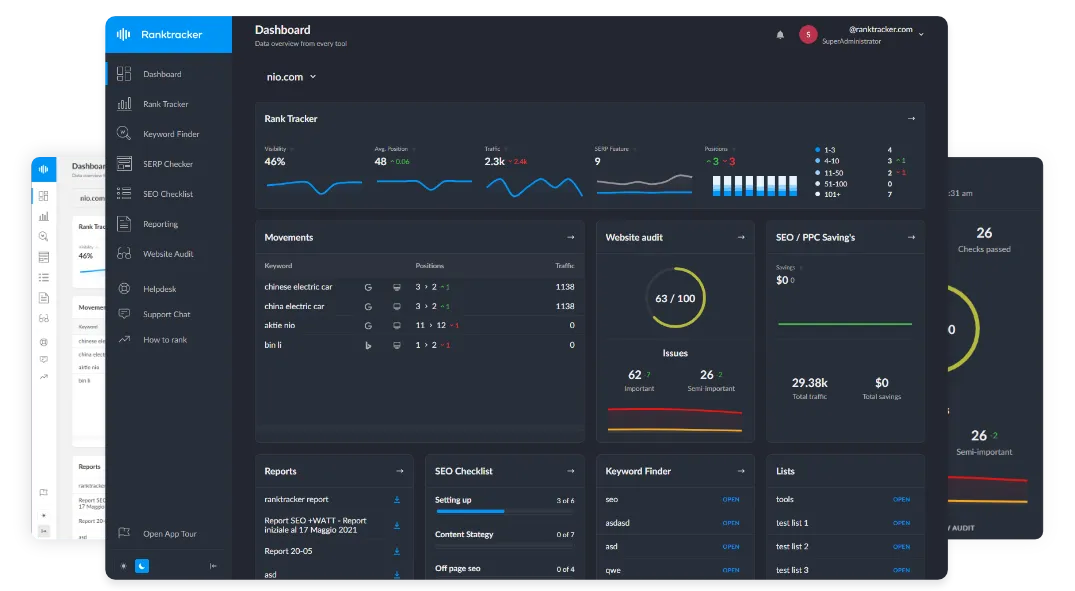
Behind every successful business is a strong SEO campaign. But with countless optimization tools and techniques out there to choose from, it can be hard to know where to start. Well, fear no more, cause I've got just the thing to help. Presenting the Ranktracker all-in-one platform for effective SEO
We have finally opened registration to Ranktracker absolutely free!
Create a free accountOr Sign in using your credentials
Machine learning algorithms can identify complex patterns that human analysts would miss. A neural network trained on thousands of games might discover that the combination of specific factors—opponent's recent form, time of season, home-field advantage, injury status—predicts outcomes more accurately than any single factor. The algorithm finds these relationships without being explicitly programmed to look for them.
The power of machine learning comes from its ability to handle high-dimensional data. Traditional statistical analysis works best with a handful of variables. Machine learning can process hundreds or thousands of variables simultaneously. It can identify interactions between variables that human analysts might never consider.
Validation and Testing
Rigorous analytical teams don't simply trust their models. They constantly test them against real-world outcomes. A model that predicts 60% of game results correctly is better than random chance (50%) but far from perfect. Teams analyze whether the model systematically overestimates or underestimates certain types of games. They identify situations where predictions consistently miss and adjust accordingly.
This iterative process of testing, analyzing, and refining is crucial for building accurate models. A model that performs well on historical data might fail on new data if it's overfit—essentially memorizing specific historical patterns that don't generalize. Good teams separate their data, using some for training and other data for testing to ensure their models actually work on new situations.
Cross-validation techniques help ensure models generalize properly. Teams might test their models on data from different seasons, different leagues, or different eras. If a model only works for recent seasons but fails on historical data, it's probably capturing temporary trends rather than fundamental principles.
Real-Time Analytics Applications
The true power of sophisticated analytics emerges in real-time applications. Coaches now have access to live analytics during matches. They see performance metrics updating continuously. Players wear devices that monitor their physical state, reporting fatigue levels and injury risk. Tactical analytics identify weaknesses in current opposition setup that can be exploited.
This real-time information allows tactical adjustments that weren't possible before. A coach can see that their current formation is allowing dangerous space on the wings and adjust accordingly. They can see that a particular player is significantly outperforming their normal level and make substitution decisions accordingly. They can see that their team is being out-run in the second half and adjust training intensity or substitution timing.
Sports betting platforms use similar real-time analytics. Odds update constantly as new information arrives. Weather changes, injury reports, and team news all flow into updating probability calculations. The resulting odds reflect genuine probabilities rather than arbitrary guesses.
Competitive Advantages Through Superior Analytics
Teams that invest in superior analytics gain measurable advantages. The most obvious advantage is in player recruitment. Teams can identify undervalued players—athletes whose actual performance exceeds their market price. Buying undervalued talent while selling overvalued players creates advantages that compound over time.
The All-in-One Platform for Effective SEO
Behind every successful business is a strong SEO campaign. But with countless optimization tools and techniques out there to choose from, it can be hard to know where to start. Well, fear no more, cause I've got just the thing to help. Presenting the Ranktracker all-in-one platform for effective SEO
We have finally opened registration to Ranktracker absolutely free!
Create a free accountOr Sign in using your credentials
Analytics also inform contract negotiation and trade decisions. Understanding actual player value based on data rather than reputation allows teams to negotiate more effectively. A player whose statistical contribution is high but media perception is poor might be acquired for a lower price. A player with high reputation but declining statistics might be traded away before value deteriorates further.
The All-in-One Platform for Effective SEO
Behind every successful business is a strong SEO campaign. But with countless optimization tools and techniques out there to choose from, it can be hard to know where to start. Well, fear no more, cause I've got just the thing to help. Presenting the Ranktracker all-in-one platform for effective SEO
We have finally opened registration to Ranktracker absolutely free!
Create a free accountOr Sign in using your credentials
Injury prevention is another significant advantage. Predictive models identify which players are at elevated injury risk based on training load, recent workload, and injury history. Teams can adjust training programs, provide additional recovery time, or make substitution decisions to prevent injuries. Avoiding even a single significant injury to a star player can justify the entire investment in analytics infrastructure.
Integration of Multiple Data Sources
The most sophisticated analytical systems integrate data from multiple sources. They combine tracking data with biometric data, with video analysis, with player background information, with weather data, with historical performance data. Each source provides different insights. Combining them creates a comprehensive understanding that no single source could provide alone.
APIs and data integration tools enable this combination. One system collects tracking data, another monitors biometric information, a third analyzes video footage. All of these systems feed data into a central analytics platform where it's combined and analyzed. This integration is technically complex but immensely powerful.
Overcoming Analytical Challenges
Despite their power, data-driven approaches have limitations. Data can't capture everything that matters. The intangible factor of team morale might influence performance but be nearly impossible to quantify. Individual brilliance—a player making an extraordinary play—might defy prediction. Unexpected events like injuries or weather create unpredictability.
Good analytical teams understand these limitations. They use data to enhance decision-making, not replace it. They combine analytical insights with human expertise and experience. This hybrid approach—marrying machine intelligence with human wisdom—produces better results than either approach alone.
The Future of Sports Analytics
Analytics will become increasingly sophisticated as technology improves. Artificial intelligence systems will develop more nuanced understanding of complex situations. Biometric monitoring will provide more detailed information about player physical and psychological state. Real-time tactical analysis will become more precise and actionable.
The competitive landscape will shift too. As more teams adopt analytics, the competitive advantage from merely using data will diminish. Future advantages will accrue to teams that develop superior analytical capabilities—better models, better integration of data sources, better interpretation of insights.
Conclusion
The revolution in sports analytics represents a broader transformation in decision-making across all sectors. Data-driven approaches produce better decisions than intuition alone. Sophisticated analytical tools transform raw data into actionable insights. Machine learning algorithms identify patterns that humans would miss. Real-time analytics enable dynamic decision-making. The accuracy of modern prediction systems far exceeds what was possible just decades ago. This transformation has implications far beyond sports—it demonstrates how organizations can harness data to make better decisions, optimize operations, and gain competitive advantages. As technology continues to advance, data-driven decision-making will become increasingly central to success in virtually every domain.