
Intro
SEO is one of the most powerful ways to bring qualified visitors to an ecommerce website. But traffic alone does not create revenue. If organic visitors land on your site, browse for a few seconds, and leave without subscribing, buying, or engaging, much of that SEO value is wasted.
That is where conversion rate optimization becomes essential. Tools like Wisepops help ecommerce brands turn search traffic into leads, customers, and repeat buyers by showing targeted on-site messages at the right moment. A well-planned popup builder can support email capture, product discovery, cart recovery, special offers, and personalized recommendations without disrupting the user experience.
The goal is not to add pop-ups everywhere. The goal is to use search intent, visitor behavior, and page context to show relevant offers that help organic visitors take the next step.
Why SEO and Conversion Rate Optimization Work Better Together
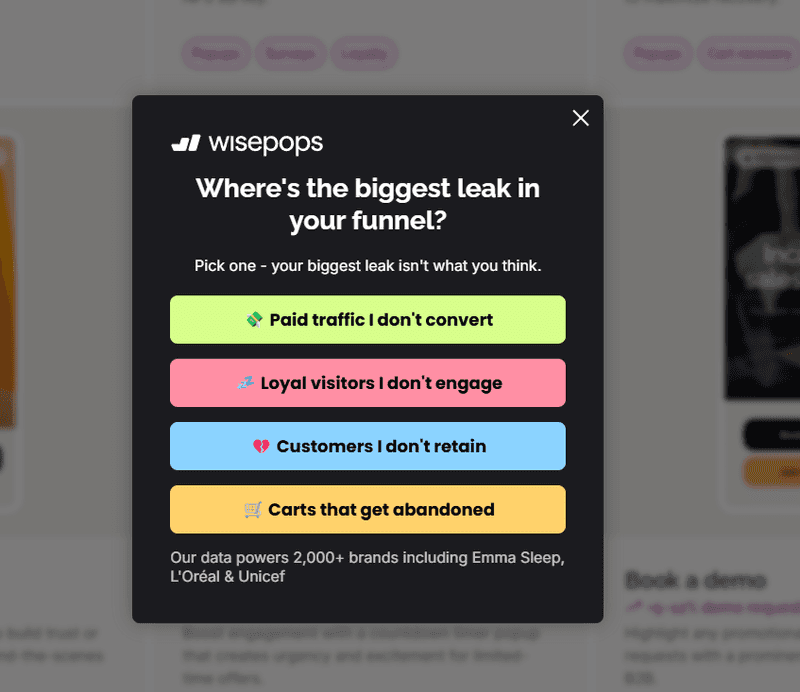
SEO and conversion rate optimization are often treated as separate strategies.
SEO focuses on visibility. It helps your pages rank for relevant keywords and attract visitors from search engines. CRO focuses on what happens after someone lands on your website. It improves the chances that visitors complete valuable actions such as joining an email list, creating an account, adding a product to cart, requesting a demo, or making a purchase.
For ecommerce brands, these two areas should work together.
The All-in-One Platform for Effective SEO
Behind every successful business is a strong SEO campaign. But with countless optimization tools and techniques out there to choose from, it can be hard to know where to start. Well, fear no more, cause I've got just the thing to help. Presenting the Ranktracker all-in-one platform for effective SEO
We have finally opened registration to Ranktracker absolutely free!
Create a free accountOr Sign in using your credentials
Organic traffic can be expensive to earn. It takes time to create content, build authority, optimize product pages, improve technical SEO, and compete for rankings. Once that traffic arrives, every missed conversion represents lost potential.
A visitor who finds your site through Google may already have strong intent. They may be comparing products, reading guides, checking reviews, or looking for a specific solution. If your site does not guide them toward the next step, they may leave and buy from a competitor.
Pop-ups can help bridge that gap.
When used correctly, pop-ups can:
- Capture email subscribers from informational traffic
- Offer discounts to high-intent shoppers
- Recommend relevant products based on page content
- Reduce cart abandonment
- Promote limited-time offers
- Encourage first-time visitors to stay engaged
- Segment visitors based on interest or buying stage
The key is relevance. A generic pop-up shown to every visitor is unlikely to perform as well as a personalized message matched to the visitor’s intent.
Aligning Pop-Ups with Search Intent Across the Customer Journey
Not every organic visitor is ready to buy immediately. Some are researching. Some are comparing options. Some are ready to purchase but need reassurance. Your pop-up strategy should reflect these different stages.
Search intent usually falls into four broad categories.
Informational Intent
Informational visitors are looking for answers. They may search for questions like:
- “how to choose running shoes”
- “best skincare routine for dry skin”
- “what size rug for living room”
- “how to style linen trousers”
These visitors may not be ready to buy yet, but they are valuable. They are entering your funnel through educational content.
For this type of traffic, aggressive discount pop-ups may feel premature. Instead, use pop-ups that offer extra value.
The All-in-One Platform for Effective SEO
Behind every successful business is a strong SEO campaign. But with countless optimization tools and techniques out there to choose from, it can be hard to know where to start. Well, fear no more, cause I've got just the thing to help. Presenting the Ranktracker all-in-one platform for effective SEO
We have finally opened registration to Ranktracker absolutely free!
Create a free accountOr Sign in using your credentials
Examples include:
- Downloadable buying guides
- Email courses
- Style guides
- Product care tips
- Checklists
- Quiz-based recommendations
- Newsletter signup offers
A visitor reading a guide about choosing running shoes may respond well to a pop-up offering a “Find Your Perfect Running Shoe” quiz. Someone reading about skincare routines may be more likely to subscribe for a personalized routine than claim a generic discount.
Commercial Investigation Intent
Commercial investigation visitors are comparing products or brands. They may search for:
- “best protein powder for beginners”
- “best ergonomic office chairs”
- “shopify pop up examples”
- “best winter jackets for women”
- “brand A vs brand B”
These visitors are closer to buying, but they may still need confidence.
Pop-ups for this stage should support decision-making. Instead of simply pushing a discount, focus on product education, social proof, or helpful recommendations.
Useful pop-up ideas include:
- Product comparison guides
- Best-seller recommendations
- “Need help choosing?” quizzes
- Review highlights
- Limited-time first-order incentives
- Free shipping reminders
- Expert advice signup forms
For example, an ecommerce store selling supplements could show a targeted pop-up on comparison pages offering a quiz to match visitors with the right product based on goals, diet, and experience level.
Transactional Intent
Transactional visitors are ready to act. They may search for:
- “buy leather laptop bag”
- “organic dog food delivery”
- “discount running shoes”
- “same day flower delivery”
- “black dress size 10”
These visitors have strong buying intent. Pop-ups can be more direct here, as long as they are timed correctly.
Effective pop-ups for transactional traffic include:
- First-order discount offers
- Free shipping thresholds
- Bundle offers
- Cart abandonment messages
- Stock urgency messages
- Exit-intent offers
- Product-specific promotions
For example, if a visitor lands on a product category page from a search like “buy organic dog food online,” a pop-up offering 10% off their first subscription order may be highly relevant.
Navigational and Branded Intent
Branded visitors already know your business. They may search for your store name, a specific product name, or your brand plus a term such as “discount code,” “reviews,” or “shipping.”
These users may need less persuasion but more convenience.
Pop-ups for branded traffic can focus on:
- Loyalty program signup
- New product announcements
- Personalized offers for returning visitors
- Referral campaigns
- Back-in-stock notifications
- VIP early access
Returning visitors should not always see the same pop-up as first-time visitors. If someone has already subscribed, show them something more relevant, such as a product recommendation or loyalty offer.
The Best Pop-Up Strategies for Converting Organic Traffic
Pop-ups work best when they match the visitor’s page, intent, behavior, and stage in the buying journey. Below are some of the most effective strategies ecommerce brands can use.
1. Use Exit-Intent Pop-Ups to Recover Leaving Visitors
Exit-intent pop-ups appear when a visitor is about to leave the page. For organic traffic, this can be especially useful because many SEO visitors arrive from informational or comparison searches and leave after getting an answer.
An exit-intent pop-up gives you one more chance to continue the relationship.
Examples:
- “Before you go, get 10% off your first order.”
- “Want the full buying guide? Send it to your inbox.”
- “Still comparing options? Take our 30-second product quiz.”
- “Save this guide and get our best tips by email.”
Exit-intent offers work best when they are specific to the page. A visitor leaving a blog post about “how to choose a mattress” should not see the same message as someone leaving a cart page.
2. Offer First-Time Visitor Discounts on High-Intent Pages
Many ecommerce brands use first-order discounts to convert new visitors. This can work well, especially on product, category, and landing pages that attract transactional SEO traffic.
However, timing matters.
If the pop-up appears instantly, it may interrupt the visitor before they understand your product. A better approach is to trigger the offer after a short delay, after scroll depth, or when the visitor shows buying behavior.
Examples of useful triggers:
- After 10 to 20 seconds on page
- After viewing two or more products
- After scrolling 50% of the page
- After adding an item to cart
- On exit intent
The offer should feel like a helpful nudge, not a wall blocking the shopping experience.
3. Promote Lead Magnets on Blog and Guide Pages
SEO blog traffic often sits higher in the funnel. These visitors may not be ready to purchase, but they may be willing to exchange their email for helpful content.
Lead magnet pop-ups are ideal for this type of traffic.
Examples:
- Size guides
- Buying checklists
- Recipe books
- Style lookbooks
- Product comparison PDFs
- Email courses
- Discount plus guide combinations
For example, a kitchenware brand ranking for “best pans for induction cooking” could offer a downloadable induction cookware guide. A fashion brand ranking for “capsule wardrobe essentials” could offer a seasonal outfit planner.
This turns informational SEO traffic into an owned audience that can be nurtured through email marketing.
4. Use Product Recommendation Quizzes
Product quizzes are one of the strongest ways to personalize the ecommerce experience. Instead of asking visitors to browse dozens or hundreds of products, a quiz helps narrow the choice.
This is especially useful for organic visitors who arrive from broad keywords.
Examples:
- “Find your perfect skincare routine”
- “Choose the right supplement for your goal”
- “Find your ideal running shoe”
- “Build your home office setup”
- “Find the best gift in 60 seconds”
A quiz pop-up can capture email addresses, segment visitors, and guide users toward products that match their needs.
This improves both conversion potential and customer data quality.
5. Trigger Pop-Ups Based on Page Category
A generic sitewide pop-up is easy to set up, but category-specific pop-ups usually perform better.
Someone browsing men’s jackets should see a different offer from someone reading a blog post about pet nutrition. Someone viewing a sale page may need urgency, while someone reading an educational guide may need more information.
Examples:
- Blog pages: newsletter, guide, checklist, quiz
- Product pages: discount, reviews, bundle offer, back-in-stock alert
- Category pages: best-seller recommendations, free shipping, first-order offer
- Cart pages: cart recovery, free shipping threshold, limited-time incentive
- Returning customer pages: loyalty program, referral offer, VIP access
This makes the pop-up feel connected to the visitor’s intent.
6. Use Scroll-Based Pop-Ups for Engaged Readers
Visitors who scroll deep into a page are more engaged than those who bounce quickly. Scroll-based pop-ups allow you to target people who have shown interest.
For SEO content, this can be effective because it avoids interrupting the visitor too early.
Examples:
- Trigger a guide download after 50% scroll depth
- Show a newsletter signup near the end of a blog post
- Promote related products after a visitor reads most of a buying guide
- Offer a quiz once a visitor has engaged with educational content
This type of timing respects the user experience while still creating conversion opportunities.
7. Use Cart and Checkout Pop-Ups Carefully
Cart and checkout pages are sensitive. Visitors are close to buying, so the wrong pop-up can distract them.
The best pop-ups at this stage reduce friction.
Examples:
- “You are £12 away from free shipping.”
- “Add one more item and save 15% on your bundle.”
- “Need help? Chat with us before checkout.”
- “Your cart is saved for the next 30 minutes.”
- “Complete your order now and get a free sample.”
Avoid showing generic newsletter pop-ups at checkout. At this stage, the priority is helping the visitor complete the purchase.
Using Personalization and Behavioral Targeting to Increase SEO Traffic Value
Personalization is what separates high-performing pop-ups from annoying ones.
Organic visitors arrive with different needs. Some are new. Some are returning. Some came from educational queries. Some came from product keywords. Some have already viewed multiple items. Some are about to leave.
Behavioral targeting helps you show the right message based on what the visitor is doing.
Useful personalization signals include:
- Traffic source
- Landing page
- Keyword intent
- Device type
- Location
- New vs returning visitor
- Number of pages viewed
- Products viewed
- Cart value
- Scroll depth
- Time on site
- Previous purchases
- Email subscription status
For example, a first-time visitor from a blog post may see a helpful guide offer. A returning visitor who has viewed the same product twice may see a limited-time discount. A cart abandoner may see a free shipping reminder.
This increases the value of SEO traffic because more visitors are guided toward relevant actions.
The Impact of Personalized Pop-Ups on Engagement, Lead Generation, and Revenue
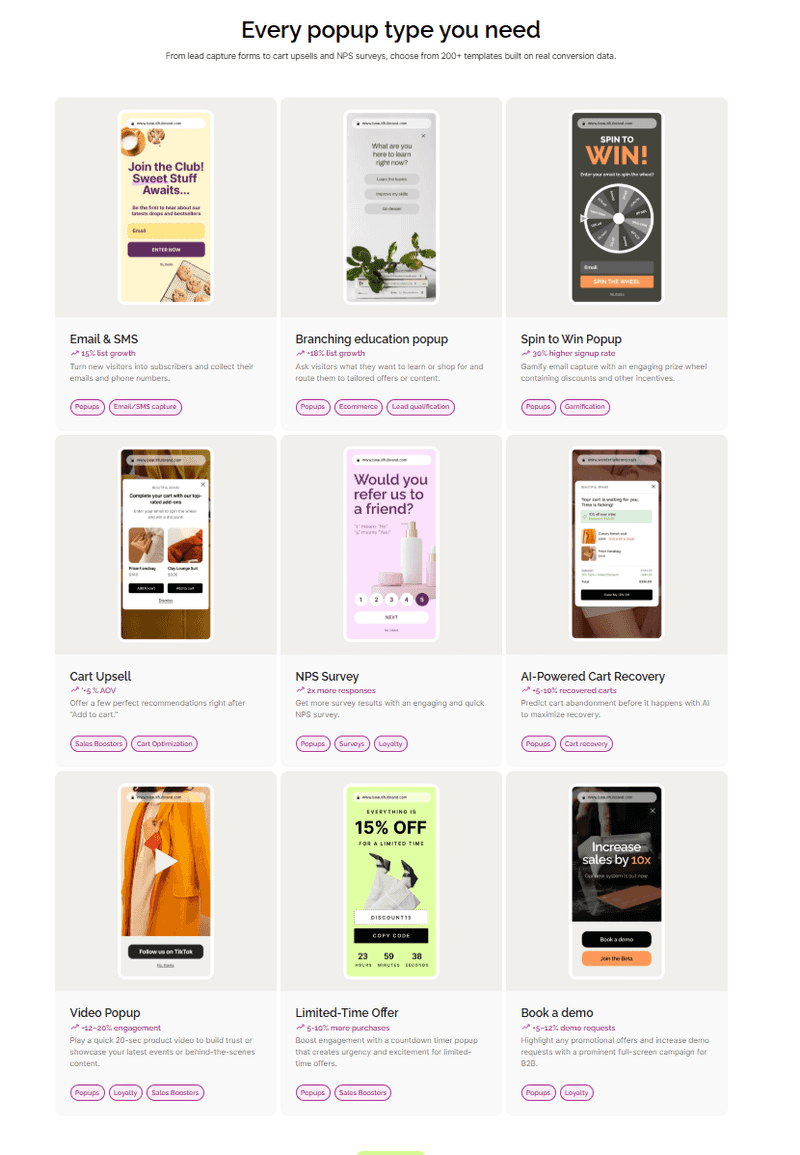
When pop-ups are used well, they can improve several important ecommerce metrics.
Higher Email Capture Rates
Organic visitors often leave without converting. Capturing their email allows you to continue the relationship through newsletters, product education, abandoned browse flows, and promotional campaigns.
This is especially valuable for informational SEO traffic, where the first visit may not lead to an immediate sale.
Better Product Discovery
Pop-ups can guide visitors to relevant products, collections, quizzes, or buying guides. This reduces friction and helps users find what they need faster.
For ecommerce stores with large catalogs, this can be especially useful.
Increased Average Order Value
Pop-ups can promote bundles, free shipping thresholds, add-ons, and complementary products.
Examples:
- “Complete the set and save 15%.”
- “You are £10 away from free shipping.”
- “Add this accessory for 20% off.”
- “Bundle your skincare routine and save.”
These messages work best when they are relevant to the products already being viewed or added to cart.
Reduced Cart Abandonment
Exit-intent and cart-specific pop-ups can help recover shoppers before they leave.
A small incentive, reassurance message, free shipping reminder, or trust signal can be enough to keep a visitor moving toward checkout.
Better Revenue from Existing SEO Traffic
One of the biggest benefits is that pop-ups help brands generate more value from traffic they already have.
Instead of only trying to increase rankings and sessions, ecommerce brands can improve how much revenue each organic visitor produces.
That means SEO becomes more profitable without needing to dramatically increase traffic volume.
Best Practices for SEO-Friendly Pop-Ups
Pop-ups can support conversions, but they need to be implemented carefully. A poor pop-up experience can frustrate users and harm engagement.
Here are some best practices.
Avoid Intrusive Mobile Pop-Ups
Mobile visitors should not be blocked by full-screen pop-ups that make content difficult to access. Keep mobile pop-ups smaller, easier to close, and timed appropriately.
Do Not Show Pop-Ups Immediately on Every Page
Give users a chance to understand the page before asking them to act. Use time delay, scroll depth, exit intent, or behavior-based triggers.
Make the Offer Relevant
The more specific the message, the better.
A blog reader may want a guide. A product viewer may want a discount. A returning customer may want loyalty rewards. A cart abandoner may need reassurance.
Keep the Design Simple
A good pop-up should be easy to understand quickly. Use a clear headline, short supporting copy, one main action, and a visible close option.
Match the Pop-Up to the Page
Pop-ups should feel like part of the journey. If someone lands on a page about summer dresses, promote a summer collection, style guide, or relevant discount. Do not show an unrelated generic message.
Test Different Offers and Triggers
Small changes can make a big difference. Test:
- Headlines
- Offers
- Timing
- Triggers
- Designs
- Form fields
- Audience segments
- Exit-intent vs scroll-based pop-ups
The best setup will vary depending on your traffic, products, margins, and customer journey.
How Ecommerce Brands Can Build a Simple SEO Pop-Up Funnel
A strong SEO pop-up funnel does not need to be complicated.
Here is a simple structure.
Blog and Guide Traffic
Use educational pop-ups.
Offer:
- Buying guides
- Quizzes
- Checklists
- Newsletters
- Product education flows
Goal:
- Capture leads and segment visitors.
Category Page Traffic
Use product discovery pop-ups.
Offer:
- Best-seller recommendations
- First-order discount
- Collection-specific offer
- Free shipping reminder
Goal:
- Move visitors from browsing to product selection.
Product Page Traffic
Use conversion-focused pop-ups.
Offer:
- Reviews
- Limited-time discount
- Bundle suggestion
- Back-in-stock alert
- Size guide
- Product quiz
Goal:
- Reduce hesitation and increase add-to-cart actions.
Cart Traffic
Use purchase-support pop-ups.
Offer:
- Free shipping threshold
- Cart reminder
- Bundle upgrade
- Help message
- Checkout reassurance
Goal:
- Reduce abandonment and increase completed orders.
Returning Organic Visitors
Use loyalty and personalization pop-ups.
Offer:
- VIP access
- Referral rewards
- Personalized recommendations
- Recently viewed products
- Loyalty points reminder
Goal:
- Increase repeat purchases and customer lifetime value.
Measuring Pop-Up Performance from Organic Traffic
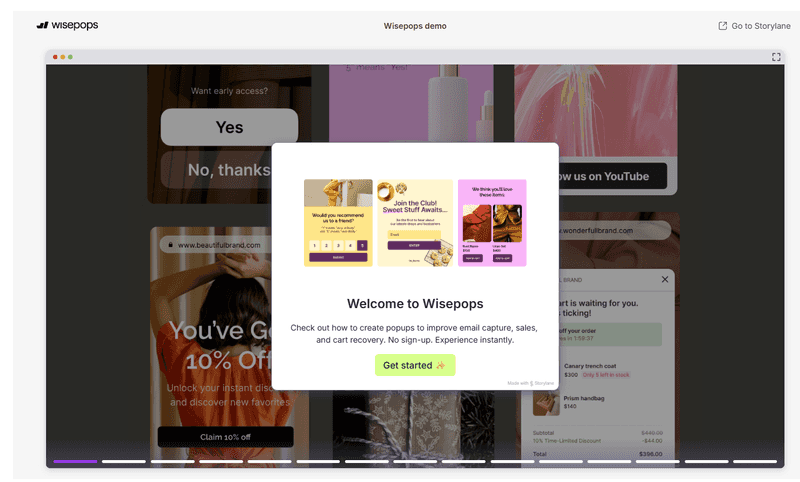
To understand whether pop-ups are helping SEO-driven conversions, ecommerce brands should track performance separately for organic visitors.
Useful metrics include:
- Pop-up view rate
- Conversion rate by pop-up
- Email signup rate
- Revenue influenced by pop-ups
- Add-to-cart rate
- Checkout completion rate
- Bounce rate
- Time on site
- Pages per session
- Revenue per organic visitor
- Conversion rate by landing page
- Conversion rate by visitor segment
It is important to look beyond basic signup numbers. A pop-up that captures many emails but reduces purchases may not be the best option. A pop-up with a lower signup rate but higher revenue impact may be more valuable.
The All-in-One Platform for Effective SEO
Behind every successful business is a strong SEO campaign. But with countless optimization tools and techniques out there to choose from, it can be hard to know where to start. Well, fear no more, cause I've got just the thing to help. Presenting the Ranktracker all-in-one platform for effective SEO
We have finally opened registration to Ranktracker absolutely free!
Create a free accountOr Sign in using your credentials
The strongest approach is to connect pop-up performance with SEO landing pages, audience segments, and ecommerce revenue.
Common Mistakes to Avoid
Pop-ups can be powerful, but they can also hurt performance when used carelessly.
Avoid these mistakes:
- Showing the same pop-up to every visitor
- Triggering pop-ups too early
- Blocking content on mobile
- Asking for too much information
- Using offers that do not match search intent
- Showing newsletter pop-ups to existing subscribers
- Showing discount offers too aggressively
- Not testing different versions
- Ignoring page-level performance
- Measuring leads but not revenue impact
The best pop-ups feel helpful, timely, and relevant. The worst ones feel like interruptions.
Final Thoughts
SEO brings people to your ecommerce website. Pop-ups help guide those visitors toward meaningful actions.
When pop-ups are aligned with search intent, page context, and visitor behavior, they can increase the value of organic traffic without requiring more rankings, more content, or more ad spend.
For ecommerce brands, the opportunity is simple: do not let organic visitors leave without a next step. Use personalized pop-ups to capture leads, support product discovery, reduce abandonment, and turn SEO traffic into measurable revenue.

