
Intro
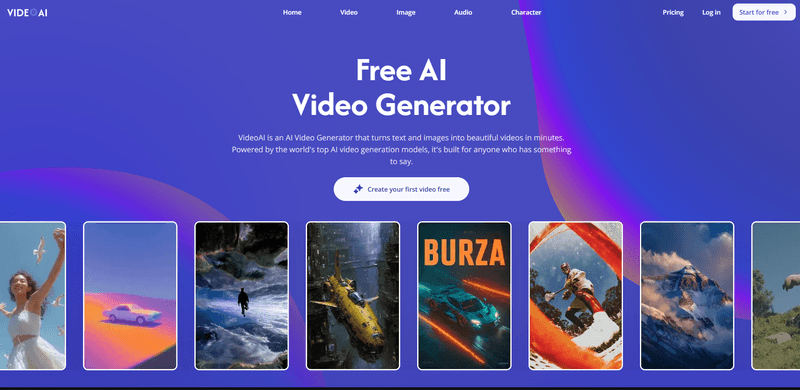
Every marketing team says the same thing about video: we need more of it, faster, and somehow cheaper too. That's the pitch behind almost every AI Video Generator on the market right now, and most of them deliver on exactly one part of that promise while ignoring the rest.
What surprised me about VideoAI wasn't the speed. It was how many different stages of our actual workflow it touched, from the first blank script to the moment we decided a video wasn't worth publishing at all.
Forrester recently found that production time, not budget, is the single biggest thing stopping marketing teams from scaling video output. That tracks with what we saw internally. Once the bottleneck moved from "can we make this" to "should we make this," everything downstream got sharper.
Here's what actually changed, step by step.
Turning a Blank Page Into a 90-Second Script
I used to stare at an empty doc for way too long before writing a single line of video copy. Now I drop a rough bullet list of talking points into VideoAI and get a structured script back in under a minute.
The process is simple: paste your key messages, pick a tone (casual, technical, punchy), and let it draft a scene-by-scene breakdown. I still edit maybe 30% of what comes out, but that's a fraction of starting from nothing.
Watching a Text Prompt Become a Talking Presenter
This one still feels a little weird every time I do it. You type a script, choose a presenter style, and within a few minutes there's a person on screen delivering it with matched lip movement and pacing.
The All-in-One Platform for Effective SEO
Behind every successful business is a strong SEO campaign. But with countless optimization tools and techniques out there to choose from, it can be hard to know where to start. Well, fear no more, cause I've got just the thing to help. Presenting the Ranktracker all-in-one platform for effective SEO
We have finally opened registration to Ranktracker absolutely free!
Create a free accountOr Sign in using your credentials
We use this mostly for internal training clips where hiring an actual presenter would be overkill. It's not going to replace our on-camera team for brand content, and honestly, it shouldn't.
Slicing One Webinar Into a Week of Social Clips
Our 45-minute product webinars used to die a quiet death after the live event. Now we run the recording through VideoAI's clip tool, which flags high-engagement moments and auto-cuts them into 30-60 second segments.
Last quarter, one webinar turned into 11 usable clips across five platforms, and the whole process took under 20 minutes instead of the two afternoons our editor used to spend hunting for good moments manually.
Dubbing a Product Demo Into Five Languages Before Lunch
This is the item that actually saved us real money. We had a demo video that needed localization for a launch in Germany, Brazil, Japan, France, and South Korea, and our old agency quote for that work was $4,200 with a two-week turnaround.
VideoAI's dubbing feature matched mouth movements to translated audio and delivered all five versions in about three hours. It cost us less than a fifth of that quote, and we shipped the campaign a full week ahead of schedule.
Rough Cuts That Stop Looking Like Rough Cuts
Editing has always been the part of video production nobody wants to talk about, because it's slow and a little tedious no matter how good your team is. VideoAI's auto-editing pass handles pacing, removes dead air, and syncs background music to scene changes before a human ever touches the timeline.
Our editors still do a final polish pass, adding brand touches and adjusting a few transitions by hand. But they're starting from something 70% finished instead of a raw dump of footage.
Running Three Hooks Against Each Other Instead of Guessing
For a while, our whole approach to video hooks was "pick the one that sounds best in the room." That's not a strategy, it's a vibe, and vibes don't scale.
Now we generate three different opening hooks for the same core video, push all three as small paid tests, and let actual click-through data pick the winner before we commit budget to full distribution. One test showed a 40% difference in hook performance between our "best guess" and the actual winner, which is a gap way too big to leave to instinct.
Skipping the Video Entirely Because the Data Said No
Here's the item that doesn't belong on most lists like this, and that's exactly why it matters. Not every idea should become a video, and VideoAI's performance-prediction scoring has talked us out of at least a dozen projects that looked good on paper but scored low on projected engagement before we spent a single dollar producing them.
Skipping a bad idea early is worth more than polishing it later. We've started treating a low prediction score the same way we'd treat a failed A/B test on an email subject line, as useful information rather than a rejection.
None of this makes VideoAI a replacement for good creative judgment, and it shouldn't be treated like one. What it actually did was remove enough friction from the boring 80% of video production that our team could spend more time arguing about the interesting 20%, which, it turns out, was the whole point all along.

