
Intro

Search behavior around beauty and personal styling is changing fast. Users are no longer just looking for static inspiration galleries on Pinterest or reading heavy blog posts about face shapes. They want to see the results on themselves before they commit to a cut, a color, or a new product. If you run a salon, a beauty brand, or an affiliate site in this space, ranking for virtual makeover searches is one of the highest converting plays you can make right now.
Creating content that ranks for these queries requires a different approach than standard informational SEO. You are competing against heavy interactive elements, massive brands with big budgets, and rapidly shifting user expectations. The goal is to build content that captures intent, loads fast, and clearly directs the user to the interactive experience they came for.
Understanding the Shift in Search Intent
People typing virtual hair try on or blonde hair filters have immediate, transactional intent. They don't want a history of hair dye. They want to upload a photo and get a result. Your content needs to support that action without getting in the way.
A common mistake I see is writing a massive wall of text above the fold. Google wants to see that your page satisfies the user query quickly. Put the core interactive element or a very clear call to action right at the top. The supporting text should live below the fold. This text is still critical for search engines to understand the context of the page, but it should not block the user from their primary goal. If someone has to scroll past eight paragraphs of filler to find the upload button, they will simply leave.
Optimizing for the Discovery Phase
A lot of traffic comes from users who aren't quite ready to buy or book. They are in the discovery phase, searching for terms like what I would look like with bangs or how to test red hair.
To capture this traffic, you need to build dedicated landing pages for specific styles and questions. You could create a page specifically about trying on curtain bangs or transitioning to gray hair. Within the text on these pages, explain how users can test the look safely. Mentioning that you offer an AI hairstyle visualization tool gives them exactly what they need to bridge the gap between curiosity and action. Explain exactly what the software does with their uploaded photo and how accurate the color matching is. You want to build confidence in the technology so they actually use it.
Structuring Pages for Complex Style Changes
Major changes drive a significant portion of search volume. Think about users moving from very dark hair to platinum blonde or getting a dramatic chop. These users have higher anxiety about the change and need more reassurance.
Your content for these queries should walk them through the reality of the process alongside the virtual try on. If someone is looking to preview a radical color shift, the text should cover the maintenance, the potential damage, and the steps required to get there. Positioning an AI hairstyle transformation tool within this context makes your page highly useful. The user gets to see the potential result, but they also get the grounded, practical advice they need before sitting in a stylist chair. This combination of interactive utility and expert advice is exactly what search quality raters look for when evaluating pages.
Capturing the Male Grooming Market
The All-in-One Platform for Effective SEO
Behind every successful business is a strong SEO campaign. But with countless optimization tools and techniques out there to choose from, it can be hard to know where to start. Well, fear no more, cause I've got just the thing to help. Presenting the Ranktracker all-in-one platform for effective SEO
We have finally opened registration to Ranktracker absolutely free!
Create a free accountOr Sign in using your credentials
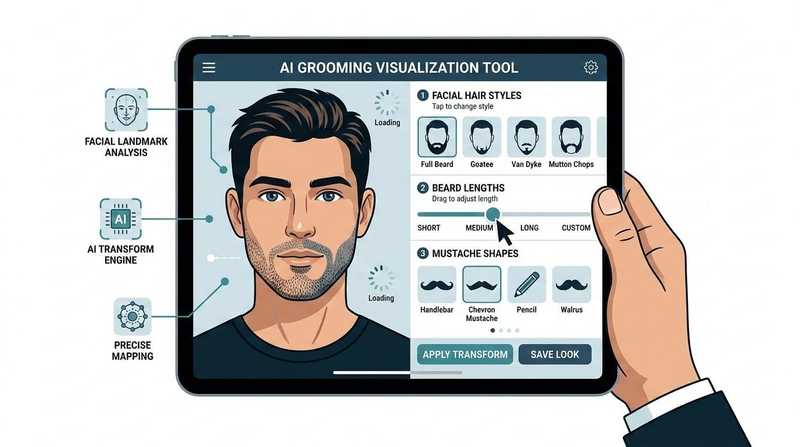
Most of the SEO focus in the virtual makeover space skews heavily toward women. That leaves a massive gap in the market for male grooming searches. Men are actively searching for ways to test out different beard styles, mustache shapes, and buzz cuts before touching the clippers.
Creating content targeted at terms like virtual beard try on or face shape mustache guide is a low competition, high reward strategy. You can structure these pages around common male grooming pain points, like dealing with patchy facial hair or matching a haircut to a receding hairline. Integrating an AI grooming visualization tool into these specific guides allows users to experiment with different lengths and styles in private. The search volume for these specific male focused queries is growing consistently, and the competition is surprisingly weak compared to women's hair color trends.
Sourcing and Displaying Static Examples
Even though the interactive element is the star, you still need static images on the page to show users what they can expect. When sourcing these images, avoid generic stock photos of people looking unnatural in studio lighting. Use realistic photos that show varied lighting conditions, different hair textures, and realistic skin tones.
From an SEO perspective, these static images need proper optimization. Name the files descriptively before uploading them. A file named ash-blonde-balayage-example.jpg is always going to perform better than a random string of numbers. Write clean, descriptive alt text for every image. This helps with traditional image search and provides more context to search engines crawling your text.
Technical SEO for Interactive Pages
Makeover pages are heavy. They usually involve complex scripts, high resolution image uploads, and rendering software. This creates a massive problem for technical SEO, specifically Core Web Vitals.
If your try on page takes six seconds to load, users will bounce, and your rankings will drop regardless of how good the content is. You have to isolate the heavy scripts. Delay loading the rendering engine until the user actually interacts with the upload button. Use highly optimized placeholder images or lightweight CSS animations for the initial page load.
Make sure your metadata is flawless. Since the main value of the page is interactive, search engine crawlers rely heavily on your title tags, headers, and schema markup to understand what the page does. Use SoftwareApplication schema if your page functions primarily as a web app. This helps Google categorize the page correctly in search results and can sometimes trigger rich snippets.
Internal Linking and Content Clusters
You cannot just launch a single interactive page and expect it to rank for everything. You need to build a content cluster around it. Write supplementary articles targeting specific long tail questions. Examples include how to choose the right shade of red hair or best haircuts for a round face. These informational articles should consistently link back to your main interactive try on pages. Use exact match or closely related anchor text. This passes authority from your informational blog posts to the highly transactional makeover pages.
Keep the site architecture flat. A user should be able to reach your core virtual styling pages within two clicks from the homepage. A buried page will struggle to gain organic traction.
Measuring Success Beyond Organic Traffic
Traffic is a decent vanity metric, but it does not pay the bills. When you run SEO for virtual try on content, you have to look at how people actually interact with the page. Look at your engagement rate. Are people actually uploading photos, or are they landing on the page and leaving immediately? If the drop off is high, your user interface might be too complicated or your page speed is lagging.
Track the next step in the funnel. A successful session isn't just someone testing out a new hair color. It is someone testing that color and then clicking the button to book a consultation or buy the recommended at home dye kit. Set up specific event tracking for these conversion actions. If a page ranks well and gets traffic but fails to generate conversions, you need to revisit the call to action and the layout of the results screen. You want to make the transition from virtual experiment to real world purchase as straightforward as possible.

