
Intro
Despite being an increasingly popular way to buy a variety of products — with 23% of all global retail sales being conducted online — ecommerce is _still _not people’s favorite way to shop. In fact, a recent survey found that 76% of people view ecommerce shopping as ‘lacking excitement’ while 29% of consumers think of it as a chore.
Naturally, these feelings don’t necessarily erase the benefits of online shopping — namely, convenience, availability, and variety. Nevertheless, they do indicate there’s an opportunity (and need) for retailers to elevate the ecommerce customer experience. Primarily to boost conversion rates.
The great news is that improving the ecommerce customer experience can be as easy as incorporating a few specific website elements into your online presence. So, if you’re looking for ways to drive sales while maximizing your web visitors’ likelihood of becoming customers, here are the web components and design strategies you need in your online presence.
Make Your Value Impossible to Miss
If consumers form brand opinions within 50 milliseconds of landing on a website, it’s logical that your primary web design strategy should be to instantaneously convince your target audience that you offer the value they seek.
One of the best methods to achieve this effect is to make your value propositions impossible to miss. The goal isn’t merely to guide your web visitors’ attention to attractive product imagery and hope they recognize the allure of your offer. Rather, the point of this web design strategy is to employ elements that communicate the specific user benefits your solutions can offer to your target audience.
At the end of the day, if your homepage manages to quickly communicate your core offering, web visitors will be far more likely to recognize that value as relevant and decide whether it’s the right choice to resolve their pain points.
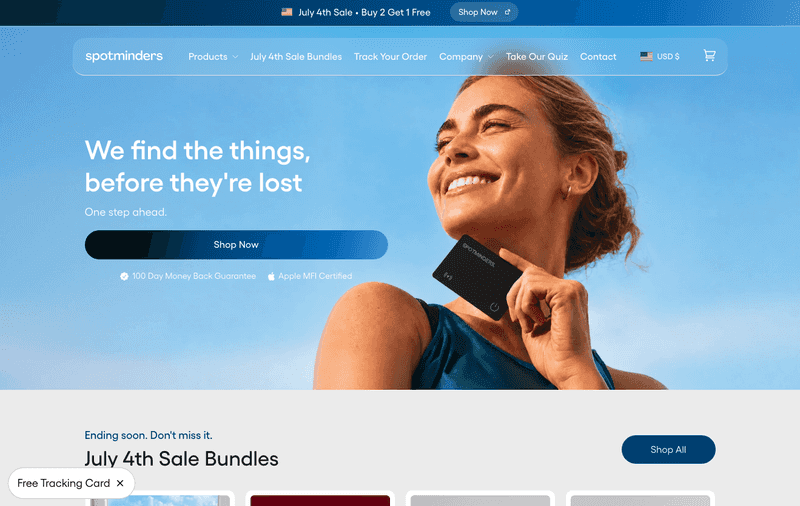
The Spotminders homepage does this exceptionally well. As it sells an innovative product, this business understands that its target audience may not instantly recognize the value of a tracking card. However, by framing the value of its products as a solution that ‘finds things before they are lost,’ SpotMinders instantly names a common pain point and positions its product as the ideal solution to prevent it.
The All-in-One Platform for Effective SEO
Behind every successful business is a strong SEO campaign. But with countless optimization tools and techniques out there to choose from, it can be hard to know where to start. Well, fear no more, cause I've got just the thing to help. Presenting the Ranktracker all-in-one platform for effective SEO
We have finally opened registration to Ranktracker absolutely free!
Create a free accountOr Sign in using your credentials
Source: spotminders.com
Help Shoppers Find What They Came For
To improve the ecommerce customer experience, you first need to understand how web visitors behave when landing on an online retail website.
For instance, research shows that 69% of shoppers go straight for the search bar when landing on a website. Yet 80% bounce because this website element commonly delivers a subpar experience.
With this in mind, one of the most effective methods to elevate your ecommerce site’s UX design is to use elements that help shoppers find what they came for. Sure, this can be a powerful (and fully customer-centric) search bar. Nevertheless, there are other site features you can use to assist your target audience during product and content discovery.
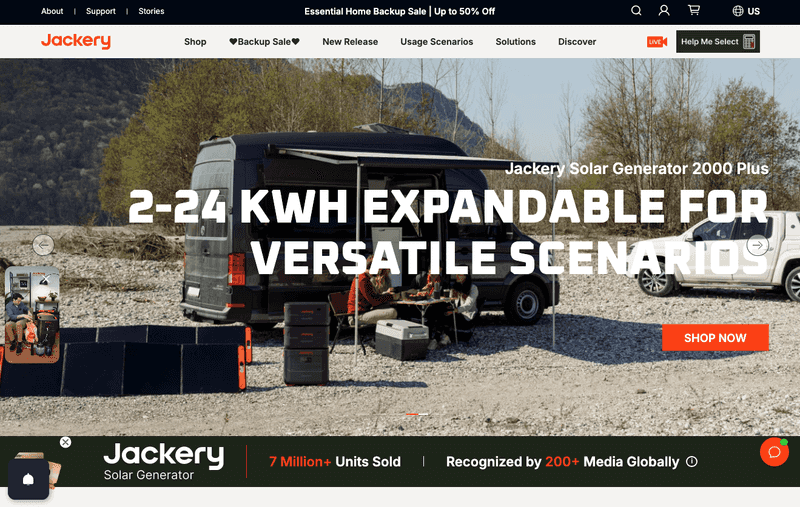
For example, Jackery uses a calculator tool to achieve this goal (note how it’s positioned in the same spot as a search bar would be on any other ecommerce website). The purpose of this website element is to help shoppers find the perfect product for their specific needs. By asking web visitors a few easy questions about how they plan to use their solar generators and portable power stations, Jackery can learn more about their use cases. It can then present them with personalized shopping suggestions that don’t just address and resolve their pain points but also feel relevant.
The All-in-One Platform for Effective SEO
Behind every successful business is a strong SEO campaign. But with countless optimization tools and techniques out there to choose from, it can be hard to know where to start. Well, fear no more, cause I've got just the thing to help. Presenting the Ranktracker all-in-one platform for effective SEO
We have finally opened registration to Ranktracker absolutely free!
Create a free accountOr Sign in using your credentials
Source: jackery.com
Answer Questions Before Customers Ask
In-depth product understanding is a non-negotiable prerequisite of purchase intent.
Ultimately, consumers won’t choose to buy a product they don’t fully recognize the value of — especially if it’s a big-ticket item. Yet, when it comes to providing ecommerce customers with an enjoyable shopping experience, most businesses still fail to ensure proper product education before asking web visitors to convert. And that could be why their conversion rates remain low.
Fortunately, there’s a simple solution to this problem. It’s to answer customer questions before they have to ask.
According to research, consumers are 131% more likely to convert after interacting with educational content. So, one of the best web strategies you can employ to boost CX is to proactively provide the practical product information your shoppers need to make an informed and confident purchase decision.
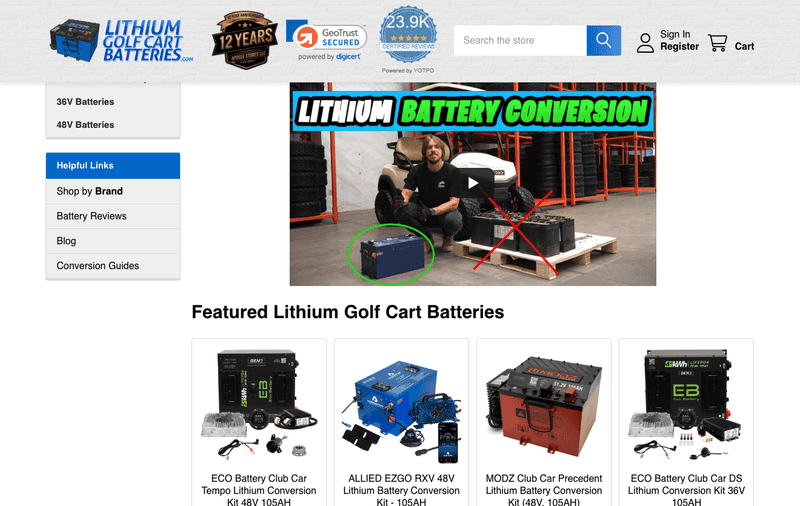
For instance, LithiumGolfCartBatteries does precisely this. In addition to sharing sufficient product details on its product collection pages (including voltage, compatibility, and performance), this business also invests in buyer education through engaging informational content. The video at the top of the homepage, for example, guides prospects through the entire lithium battery conversion process, helping web visitors gain a complete understanding of how the transformation works, effectively answering most of their questions before they even arise.
Source: lithiumgolfcartbatteries.com
Earn Trust Before Asking for the Sale
Another consumer behavior you need to understand before attempting to improve the ecommerce customer experience on your website is the utmost insistence on brand trust before making a purchase decision.
Research consistently shows that brand credibility is important to shoppers exploring solutions to their pain points. But did you know that your site’s capacity to earn customer trust also influences your bottom line? According to survey data from Salsify, 68% of people are willing to pay more for products by brands they trust.
So, if you’re exploring opportunities to elevate ecommerce UX, make sure you highlight website elements that earn customer trust before asking for the sale. Whether these include social proof, trust badges, certificates, or UGC is entirely up to you. What matters is that the information they convey is relevant to your target audience and that it supports your claims in a way that drives customer confidence. Transparency around data collection is another important part of building that trust. Clear cookie consent on website practices help shoppers understand how their data is being collected and give them greater control over their privacy while they browse. For businesses looking to make this process easier and more transparent, Cookiebot provides a way to manage cookie consent while giving visitors clear choices about their privacy.
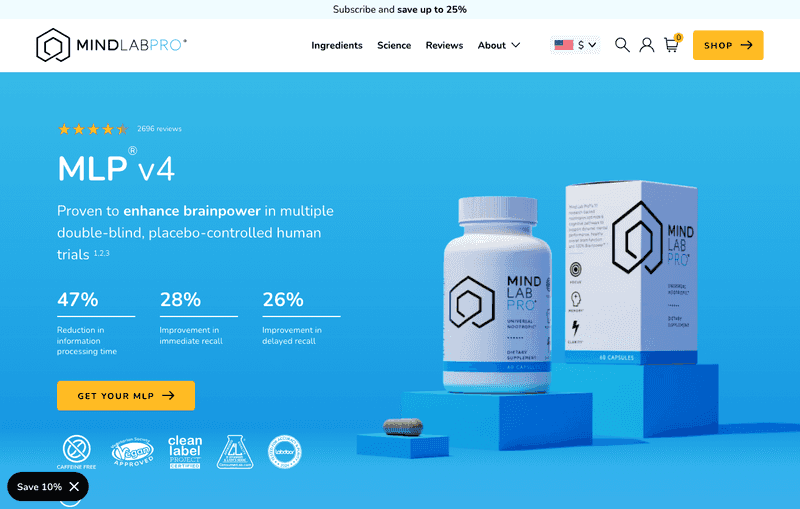
For inspiration on how you can do this — even in low-trust industries — you can check out Mind Lab Pro. This business knows how important scientific proof is to its audience. That’s why it reinforces each of its claims with scientific data, credibility signals, and educational content. Moreover, it consistently highlights measurable data regarding its products’ effectiveness, reducing web visitors’ hesitation by making buyers feel informed about each solution (and therefore more comfortable with the prospect of clicking the ‘Buy’ button).
Source: mindlabpro.com
Guide Every Click with Clear Calls to Action
The typical buyer’s journey is rarely linear. Yes, shoppers need to evaluate, compare, and re-evaluate several solutions before making a final purchase decision. But they often need additional reassurance — especially in settings where they’re not entirely convinced they’re qualified to make the best possible choice.
Social proof can often remove some of the doubts they may have about how to proceed with resolving their pain points. However, in many cases, the signal shoppers truly require isn’t about risk minimization. Instead, it’s about certainty — about knowing precisely what comes next if they decide to continue interacting with the brand they’re exploring.
In other words, clarity in your CTA buttons is essential for improving the ecommerce customer experience. By helping consumers understand what comes next in their buyer’s journey and emphasizing the natural progression through the sales funnel, you can eliminate your prospects’ uncertainty and elevate their confidence (which automatically positively influences purchase intent).
Drift, for instance, does precisely this with its action-oriented CTAs. The brand uses website messaging and CTA button copy to make it easy for visitors to comprehend what a conversion involves. This means that, while browsing the brand’s website, consumers don’t just associate a purchase with getting the brand’s products. Instead, they learn precisely what Drift has to offer — including 50% off, free shipping, and the ability to choose from several exclusive scents.
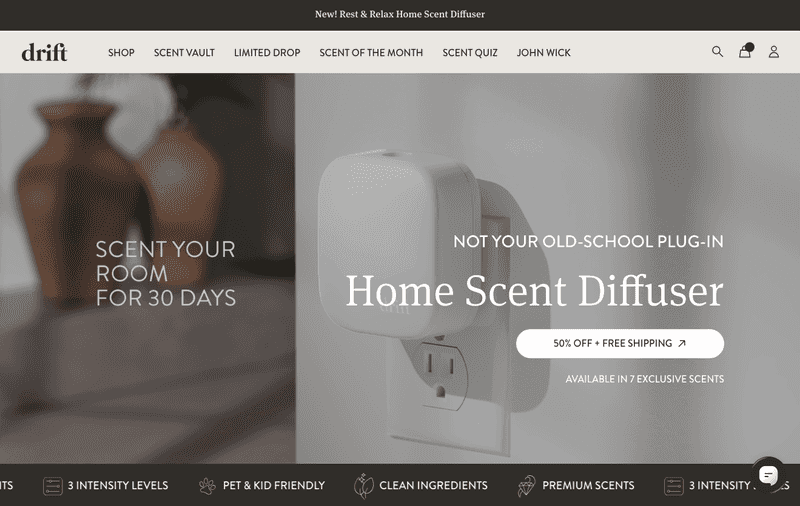
Source: drift.co
Surface Products Shoppers Didn’t Know They Wanted
A great ecommerce customer experience doesn’t just boil down to meeting your target audience’s obvious needs.
Yes, shoppers do expect businesses to show they understand their unique pain points and expectations. However, they also want businesses to go above and beyond to deliver an enjoyable and productive experience. In fact, in many situations, consumers (subconsciously) expect businesses to recognize and predict needs that they aren’t even aware they have.
Now, in practice, this is easier said than done. Experience and market research may give you some clues as to what your prospects require for an unmatched CX. However, true sales cycle customization that predicts your customers’ future needs requires a far more personalized approach.
One of the best ways to achieve the desired effect is, of course, to tailor the content shown on your website based on your visitors’ browsing behavior.
Check out how Brain Ritual does it on their Science page. This brand’s educational content naturally introduces visitors to relevant products — all while web visitors conduct awareness-stage research on wellness topics. By using top-of-the-funnel resources to enhance product discovery, Brain Ritual doesn’t just create a customer experience that naturally guides prospects through the buyer’s journey. More importantly, it pairs _helpful and relevant _information with promotional messaging, resulting in a set of resources that prioritize customer education while still driving sales (without feeling like an aggressive sales pitch).
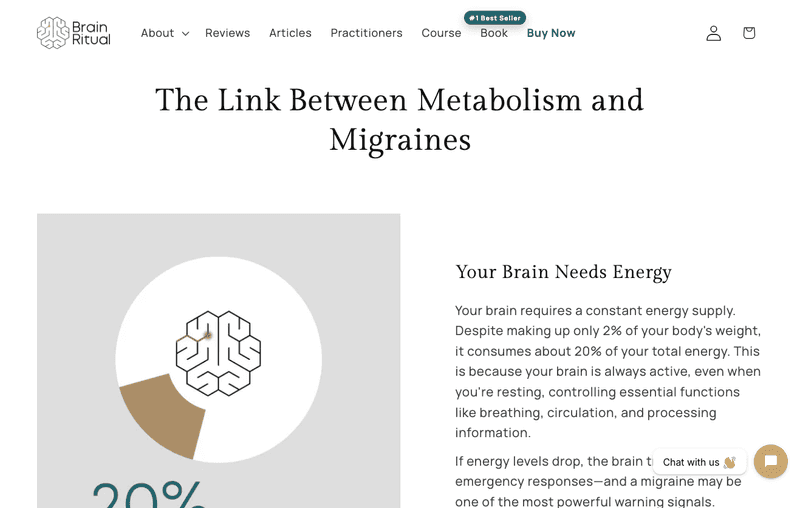
Source: brainritual.com
Make Checkout Feel Effortless
Finally, when attempting to improve the ecommerce customer experience through customer-centric website elements, don’t forget that the main reason consumers abandon the buyer’s journey is often a complicated or confusing checkout process.
Ultimately, even if they recognize the value of your offer and decide it’s a great solution to their pain points, shoppers won’t have the patience to tolerate a checkout process that’s lengthy, confusing, untrustworthy, or outright flawed.
The checkout process on your ecommerce website needs to be simple, user-friendly, and convenient.
The best method to make it feel effortless is, of course, to enable one-click checkout. Naturally, there are alternative UX strategies that reach the same outcome, and the best one will largely depend on your target audience’s specific needs.
The All-in-One Platform for Effective SEO
Behind every successful business is a strong SEO campaign. But with countless optimization tools and techniques out there to choose from, it can be hard to know where to start. Well, fear no more, cause I've got just the thing to help. Presenting the Ranktracker all-in-one platform for effective SEO
We have finally opened registration to Ranktracker absolutely free!
Create a free accountOr Sign in using your credentials
For instance, Esker recognizes a few things its target audience might expect from a truly enjoyable checkout process. First and foremost, it acknowledges that it sells consumable products that most customers might want to re-purchase at regular intervals. So, to make the ecommerce customer experience more user-friendly, it includes a (discounted) subscription option for customers who prefer convenience. Secondly, Esker understands that many shoppers have preferences regarding how they pay when shopping online. So, it shows that it supports most of the popular ones right next to its main CTAs, including trustworthy buy-now-pay-later options.
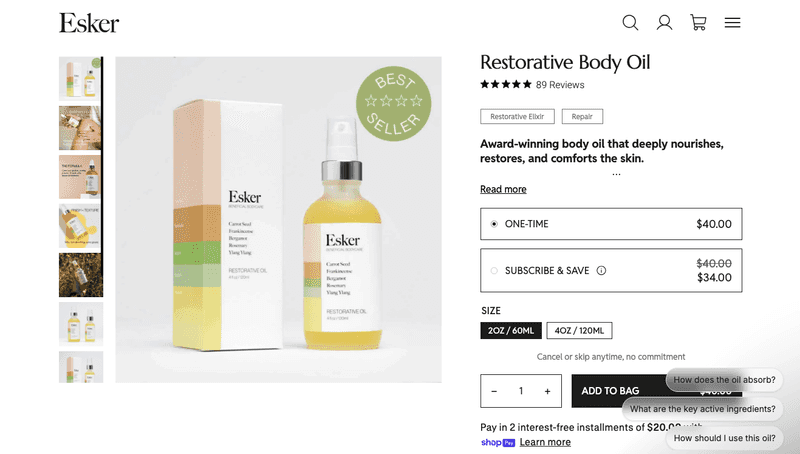
Source: eskerbeauty.com
Final Word
An enjoyable and conversion-inspiring ecommerce customer experience largely depends on your website’s ability to predict and meet web visitors’ needs. Some will be fairly common — including the expectation of a fast, responsive, and error-free browsing/shopping experience. But others will require a bit more audience insight.
The website elements discussed in this guide can all help you improve your CX and guide your leads closer to a purchase decision. Of course, to get the most out of your web design changes, make sure you’re focusing your energy on the tweaks your prospects genuinely want and need from your brand. That way, you’ll ensure that you’re spending your resources where they can deliver the highest ROI. You’ll also have created an overall browsing experience that shows your brand’s in-depth understanding of customer needs. And that’s a marvelous way to position your offer as the best way for ideal customers to resolve their pain points.

