Intro
For many companies, the front desk used to set the tone before any sale, booking, or service request moved forward. A visitor could ask a quick question, explain a problem in plain language, and get an answer shaped by context instead of a preset menu. Now that role often belongs to a homepage, a chatbot, or a payment screen. The shift brings speed and lower operating costs, and few finance teams argue with that outcome.
Still, removing human contact changes more than staffing levels. It changes trust, patience, accountability, and the way small concerns are handled before they grow into larger ones. When the website becomes the front desk, businesses gain scale but give up signals that people once read in seconds.
The financial case for replacing the front desk with digital systems
Moving from reception staff to a digital-first interface changes a company’s financial profile in direct and measurable ways. Labor costs fall fast when businesses remove salaries, benefits, payroll taxes, shift coverage, and turnover-related hiring cycles. Real estate needs also shrink because there is less need for reception space, waiting areas, desk equipment, and local support stations.
A website can handle high traffic at the same time, which means growth no longer depends on adding another person for every rise in demand. Once the system is built, the cost of each extra interaction drops sharply. That advantage becomes even clearer after hours. Websites capture leads, accept payments, log requests, and move people through checkout at midnight without overtime pay or weekend premiums. For platforms with heavy traffic, that round-the-clock intake can change margins in a serious way.
The same pattern appears in sectors where users expect quick deposits, simple account access, and uninterrupted payment flow. In gambling-related markets, payment clarity matters because delays often push users away. That is one reason specialized payment related casino types such as online casino iDEAL are built around speed, familiarity, and low-friction action.
The business logic is straightforward: the faster the route from intent to transaction, the more volume a system can capture without adding staff.
Trust weakens when every answer is standardized
People do not always arrive with a neat question that fits a dropdown list. Many come in uncertain, annoyed, rushed, or unable to explain the issue clearly on the first try. A human front-desk worker can read hesitation, hear urgency in a voice, and adjust the response before frustration takes hold. Digital systems usually ask the user to translate a real problem into a category first. That extra step looks minor from an operations view, yet it often creates distance at the exact moment reassurance matters most.
Standardization also affects confidence. Scripted help articles and automated replies can be accurate and still feel thin because they do not show ownership. A person can say, in effect, “I understand what is happening, and I will handle it.” A website usually says, “Select from these options.” Those messages are not equal. One builds trust through presence, while the other relies on structure alone.
The All-in-One Platform for Effective SEO
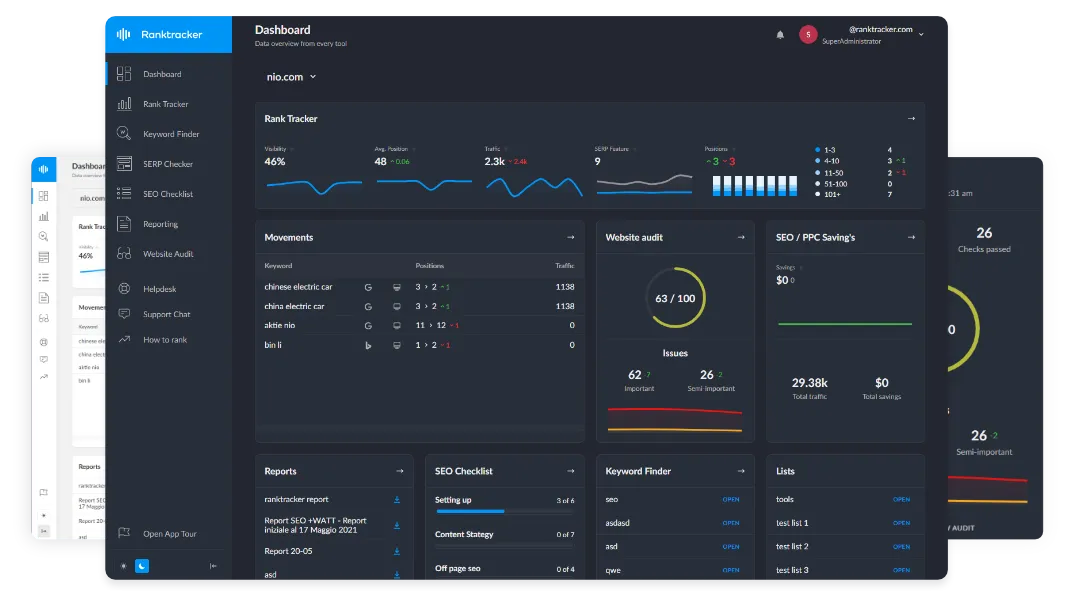
Behind every successful business is a strong SEO campaign. But with countless optimization tools and techniques out there to choose from, it can be hard to know where to start. Well, fear no more, cause I've got just the thing to help. Presenting the Ranktracker all-in-one platform for effective SEO
We have finally opened registration to Ranktracker absolutely free!
Create a free accountOr Sign in using your credentials
Over time, customers learn what kind of company they are dealing with. If every path leads back to forms, queues, and canned responses, some will conclude that efficiency matters more than understanding. That impression can stay with them even when the transaction itself works as designed.
Brand character flattens when every interaction follows the same path
Businesses often talk about voice, values, and service standards, yet people usually judge those qualities during ordinary contact. A receptionist who remembers a returning customer, explains a delay with care, or handles tension calmly gives the brand a human shape. That shape is difficult to recreate through buttons and templates alone. Digital systems can reflect tone, but they rarely convey personality with the same credibility.
Once the front desk disappears, many companies begin to sound alike. Clean design, quick links, automated confirmations, and polished help centers can make one business look much like another. The result is a loss of distinction in the very place where relationships often begin. Pricing and convenience then carry more weight because the service layer no longer creates as much separation.
This does not mean every company needs a staffed desk in the old sense. It does mean that businesses should be honest about what gets flattened when human contact is removed. If the first interaction feels purely transactional, the brand may become easier to switch away from, even if the system runs smoothly.
A better model keeps human contact available at the right moments
The strongest digital businesses do not treat automation as a full replacement for people. They use it to handle routine volume while preserving direct contact for moments that require judgment, reassurance, or flexibility. That can mean visible callback options, live support during complex steps, or clear escalation paths when a person does not fit the standard flow. The point is not to force human contact into every interaction. The point is to keep it accessible when context matters.
Good design starts by identifying friction that software handles well and separating it from situations where people still outperform systems. Payment processing, booking confirmations, status checks, and basic intake can run online with little trouble. Complaints, ambiguity, edge cases, and emotionally charged problems usually need a human hand somewhere in the chain. Businesses that ignore that distinction often save money upfront while creating drag elsewhere.
A website can function as the front desk, and for many organizations it already does. Still, the companies that hold trust over time are usually the ones that remember a simple fact: speed has value, but being reachable still matters when a person needs more than a screen can give.