Intro
Building a healthier daily routine rarely requires a complete lifestyle overhaul. For most people, the challenge is finding a few habits that work consistently, even when schedules get busy.
A balanced breakfast, regular meals, adequate hydration, movement, and sufficient sleep are familiar recommendations. Supplements often enter the picture when someone wants to address a specific nutritional need or make their existing routine more convenient.
Whole-food supplements have become one option for people interested in ingredients derived from recognizable food sources, including animal organs, dairy, plants, and other foods.
But where do these products actually fit into everyday life? And how can someone use them without turning a simple wellness routine into an unnecessarily complicated supplement schedule?
The answer starts with understanding what whole-food supplements provide, identifying where they may be useful, and building a routine around food rather than replacing it.
What are whole-food supplements?
Whole-food supplements are products made primarily from food-derived ingredients rather than formulas composed entirely of isolated vitamins and minerals.
The All-in-One Platform for Effective SEO
Behind every successful business is a strong SEO campaign. But with countless optimization tools and techniques out there to choose from, it can be hard to know where to start. Well, fear no more, cause I've got just the thing to help. Presenting the Ranktracker all-in-one platform for effective SEO
We have finally opened registration to Ranktracker absolutely free!
Create a free accountOr Sign in using your credentials
Common examples include:
- Freeze-dried beef liver and other organ supplements
- Bovine colostrum powders and capsules
- Concentrated vegetable and fruit powders
- Dried algae and seaweed supplements
- Food-derived protein and collagen products
The category is broad, and these products are not nutritionally interchangeable.
A beef liver supplement contains naturally occurring nutrients associated with liver, while a greens powder may combine several plant ingredients. Colostrum products contain components derived from the first milk produced after birth, and collagen supplements provide particular amino acids.
The term whole-food supplement is also a broad marketing description rather than a single standardized nutritional category. It doesn't guarantee that a product is minimally processed, nutritionally complete, or more effective than a conventional supplement.
Manufacturing methods vary, and some products combine food-derived ingredients with added vitamins, minerals, or other compounds.
What connects these supplements is their emphasis on food-based ingredients rather than a conventional multivitamin format.
Start with your existing diet, not a supplement shopping list
Before adding a supplement, look at what your regular meals already provide.
Someone who eats eggs, dairy, fish, vegetables, fruit, legumes, and varied protein sources may have a very different nutritional intake from someone who skips breakfast, eats irregularly, or follows a restrictive diet.
The All-in-One Platform for Effective SEO
Behind every successful business is a strong SEO campaign. But with countless optimization tools and techniques out there to choose from, it can be hard to know where to start. Well, fear no more, cause I've got just the thing to help. Presenting the Ranktracker all-in-one platform for effective SEO
We have finally opened registration to Ranktracker absolutely free!
Create a free accountOr Sign in using your credentials
That difference matters because supplements are most useful when they serve a defined purpose.
For example, a person who rarely eats animal products may need to pay particular attention to vitamin B12. Someone who avoids dairy may want to review calcium intake. A person who eats little fish might consider whether their diet supplies enough omega-3 fatty acids.
These examples don't automatically mean that everyone in those situations needs a supplement. They illustrate why the starting point should be dietary intake rather than product popularity.
A simple food audit can help identify patterns:
| Daily habit | Question to ask | Practical starting point |
| Breakfast | Does it contain protein and other useful nutrients? | Add eggs, yogurt, oats, or another balanced option |
| Lunch and dinner | Are meals varied throughout the week? | Rotate protein sources, vegetables, and whole grains |
| Snacks | Do they contribute anything beyond convenience? | Keep fruit, nuts, or yogurt available |
| Hydration | Is water available throughout the day? | Keep a reusable bottle nearby |
| Supplements | Is there a specific reason for taking each product? | Review the ingredients, dosage, and intended purpose |
The goal isn't to make every meal perfect. It's to establish a nutritional foundation before deciding what additional products belong in the routine.
Where organ-based supplements fit into everyday nutrition
Organ supplements are an example of how traditional foods have been adapted into modern supplement formats.
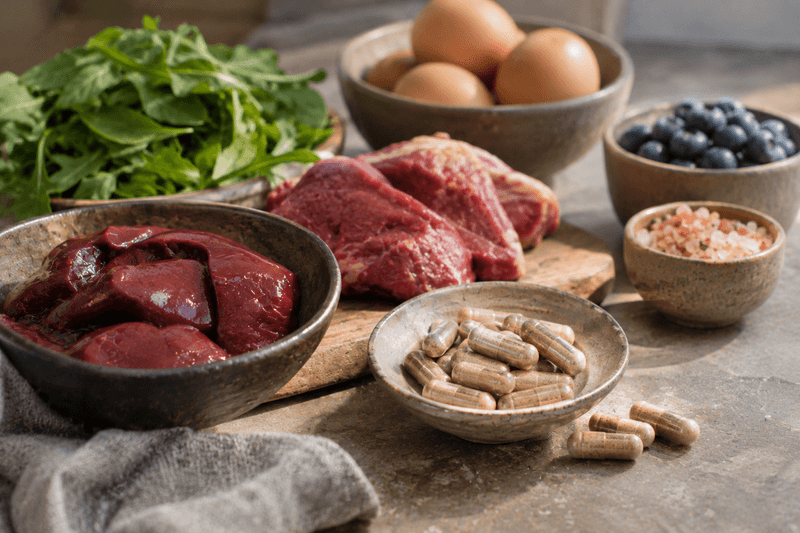
Beef liver, heart, kidney, spleen, and pancreas have been consumed in different food cultures for generations. Today, these ingredients are also available in dried or freeze-dried capsules.
Liver is particularly well known for its naturally occurring vitamin A, vitamin B12, iron, copper, and folate. Other organs have different nutritional compositions.
For people who rarely prepare organ meats, capsules provide a more convenient way to consume small amounts of these ingredients.
Brands such as Heart & Soil, Ancestral Supplements, and Codeage offer organ-based supplements for people interested in incorporating traditional animal-derived ingredients into their diets. Heart & Soil also explores this approach in its guide to whole-food multivitamins, which focuses on nutrient density and food-derived ingredients.
These products vary in their ingredient combinations, serving sizes, and sourcing practices. For example, Fortune's comparison of beef organ supplements examines popular options and highlights differences in formulation and everyday convenience.
A multi-organ supplement can fit into a routine for someone interested in nose-to-tail nutrition but unwilling or unable to prepare organ meats regularly.
However, organ supplements aren't equivalent to eating a complete serving of fresh organ meat. Their nutrient content depends on the specific ingredients, processing, and serving size.
It's also important to consider nutrients such as preformed vitamin A and copper, which can be present in concentrated amounts in liver-based products.
The practical takeaway is that organ supplements are a convenient food-derived option, not a replacement for dietary variety.
How to build a simple daily supplement routine
A supplement routine works best when it fits naturally into habits that already exist.
Someone who regularly eats breakfast may find it easier to remember supplements with that meal. Another person may prefer taking them with lunch or dinner.
The exact timing depends on the product, its ingredients, and the manufacturer's directions.
Morning: Establish the foundation
Breakfast is a useful opportunity to begin the day with a balanced meal.
For example, eggs with whole-grain toast and fruit provide a combination of protein, carbohydrates, and other nutrients. Greek yogurt with oats and berries offers another convenient option.
If a supplement is intended to be taken with food, breakfast may be a practical time to include it.
However, there is no universal rule that whole-food supplements work better in the morning.
The most important considerations are the product's instructions, how it fits with meals, and whether the routine is easy to maintain.
Midday: Focus on consistent nutrition
Lunch often becomes an afterthought during busy workdays.
A useful approach is to build meals around a protein source, vegetables, and a carbohydrate that fits individual needs.
A chicken and rice bowl, lentil salad, or tuna sandwich with vegetables can provide a more substantial nutritional contribution than relying on supplements to compensate for skipped meals.
For people taking supplements with lunch, keeping the product in a consistent, appropriate storage location can make the habit easier to remember.
Evening: Keep the routine manageable
Evening wellness habits often focus on winding down, eating dinner, and preparing for the next day.
Rather than introducing several new supplements at once, it's generally more practical to keep the routine simple.
For example, someone taking a food-derived supplement according to its label might associate it with an established meal.
There is little benefit in creating an elaborate schedule if it makes daily consistency harder.
Example of a balanced daily wellness routine
The following example illustrates how supplements can fit alongside ordinary habits rather than becoming the center of the day.
| Time of day | Wellness habit | Role of supplements |
| Morning | Balanced breakfast and water | Take a relevant supplement with breakfast if directed |
| Mid-morning | Short movement break | No supplement required |
| Lunch | Protein, vegetables, and a carbohydrate source | Optional scheduled supplement according to its label |
| Afternoon | Hydration and a nutritious snack | Focus on food rather than adding products automatically |
| Evening | Balanced dinner and a consistent sleep routine | Review whether any prescribed or recommended supplements are due |
This isn't a universal supplement schedule. Individual needs vary, and some products require particular timing or separation from medications.
The broader principle is to attach useful habits to an existing routine instead of building daily life around supplement consumption.
Whole-food supplements vs. conventional vitamins
One common question is whether whole-food supplements are better than conventional vitamin and mineral products.
The distinction is mainly about formulation.
Conventional supplements often provide specific nutrients in measured quantities. For example, a vitamin B12 tablet may supply a clearly stated amount of B12, while a vitamin D supplement provides a defined dose of vitamin D.
Whole-food supplements contain ingredients derived from foods, and their nutrient composition depends on the raw materials and processing methods.
| Factor | Whole-food supplements | Conventional vitamin supplements |
| Main ingredients | Food-derived materials such as organs, plants, or dairy | Individual vitamins and minerals or formulated blends |
| Nutrient quantities | May contain several naturally occurring nutrients | Usually specify the dose of each added nutrient |
| Main advantage | Convenient access to particular food ingredients | Precise delivery of targeted nutrients |
| Common limitation | Nutrient amounts may be less predictable or less fully disclosed | May not contain the broader food-derived ingredients someone wants |
| Best use | Adding a specific food-derived ingredient to a routine | Addressing an identified nutrient requirement |
Neither category is automatically superior.
For someone with a diagnosed nutrient deficiency, a precisely dosed conventional supplement may be more appropriate than a general food-derived product.
For someone interested in consuming particular food ingredients, a whole-food supplement may be more relevant.
The distinction becomes clearer when products are evaluated according to their intended purpose rather than broad claims about being natural or synthetic.
What to look for before adding a whole-food supplement
The front of a supplement bottle rarely tells the complete story.
A product may emphasize grass-fed sourcing, freeze-drying, organic ingredients, or a proprietary blend. Those details can be useful, but they should be considered alongside the actual ingredient panel.
Clear ingredient information is especially important in the supplement industry, where consumers often encounter broad claims about natural ingredients and wellness benefits. Ranktracker's guide to AI Overviews for supplements and vitamins also discusses why transparent product information, evidence, and responsible health claims matter when consumers research supplements online.
Ingredient transparency
Start with the full list of ingredients.
For an organ supplement, check whether the formula contains liver alone or combines several organs. If it includes a blend, look for the total amount per serving and individual ingredient quantities where available.
For a greens powder, examine the actual plants included and whether added vitamins or other compounds are present.
The more clearly a product describes its composition, the easier it is to understand how it fits into your diet.
Processing methods
Food-derived supplements often require drying, extraction, concentration, or other processing.
Freeze-drying, for example, removes moisture from frozen ingredients under reduced pressure. Desiccation is a broader term that simply means drying.
The processing method can affect characteristics of the finished product, but a particular method doesn't guarantee superior nutritional outcomes.
Look for clear manufacturing information rather than assuming that every product described as natural has been processed in the same way.
Sourcing information
Some organ supplement manufacturers emphasize grass-fed or grass-finished cattle.
Other products highlight organic certification, geographic origin, or specific agricultural practices.
These details help explain where the ingredients come from, but sourcing claims should be supported by meaningful product information.
A clearly described supply chain is more useful than a vague statement about premium quality.
Quality testing
Independent testing can provide additional information about contaminants, manufacturing consistency, or specific quality standards.
Depending on the product, relevant considerations may include heavy metals, microbiological testing, and verification of ingredient identity.
Not all certifications evaluate the same things, so shoppers should understand what a particular test or certification actually covers.
Serving size
Finally, compare the amount of the main ingredient per serving.
Two products may contain similar ingredients but provide very different quantities.
A bottle with 180 capsules, for example, provides 30 servings if the recommended serving is six capsules, but 60 servings if the serving is three capsules.
Understanding serving size makes it easier to compare products and build a realistic routine.
Common mistakes when adding supplements to a wellness routine
Even well-intentioned supplement habits can become unnecessarily complicated.
One common mistake is introducing several products simultaneously. If someone starts taking a greens powder, organ supplement, multivitamin, and additional mineral supplement at the same time, it becomes harder to understand what each product contributes.
Another is overlooking ingredient overlap.
A liver supplement may provide preformed vitamin A, while a multivitamin may also contain vitamin A. Combining products without reviewing their labels can increase total intake beyond what someone intended.
Another useful habit is checking the information available before buying. Detailed ingredient descriptions, serving instructions, and answers to common questions help consumers compare products more effectively. These are also among the educational content elements discussed in Ranktracker's guide to health supplement store SEO, which emphasizes the importance of clear product information.
A third mistake is treating supplements as a substitute for ordinary meals.
A capsule doesn't provide the same overall nutritional contribution as a balanced lunch containing protein, vegetables, carbohydrates, and dietary fiber.
Finally, many people focus heavily on the perfect time to take a supplement while overlooking whether they have a consistent reason to take it at all.
A useful routine begins with necessity and suitability, not complexity.
How to know whether your routine is working
A wellness routine should be evaluated according to what it is intended to achieve.
If the goal is to eat breakfast more consistently, the relevant measure is whether breakfast has become a regular habit.
If the goal is to improve dietary variety, look at the range of foods consumed across the week.
If a supplement was recommended to address a specific nutrient deficiency, appropriate follow-up may involve dietary assessment or laboratory testing under professional guidance.
General feelings of energy or wellness can be influenced by sleep, stress, food intake, activity, and many other factors. They aren't reliable proof that a particular supplement is working.
This distinction between personal experience and verifiable information also matters when evaluating wellness advice online. As Ranktracker explains in its article about AI Overviews for fitness and wellness brands, responsible health content should explain what is known, what varies between individuals, and where evidence is limited.
A practical approach is to review your routine periodically and ask whether each habit still serves a clear purpose.
The All-in-One Platform for Effective SEO
Behind every successful business is a strong SEO campaign. But with countless optimization tools and techniques out there to choose from, it can be hard to know where to start. Well, fear no more, cause I've got just the thing to help. Presenting the Ranktracker all-in-one platform for effective SEO
We have finally opened registration to Ranktracker absolutely free!
Create a free accountOr Sign in using your credentials
That includes supplements. Products shouldn't remain part of a daily schedule simply because they were added months earlier.
Frequently asked questions
Can whole-food supplements replace a balanced diet?
No. Whole-food supplements can provide particular food-derived ingredients, but they don't replace the overall nutritional contribution of varied meals, including dietary fiber, protein, fats, and other nutrients.
What is the best time to take whole-food supplements?
There isn't one universal time. The appropriate schedule depends on the product, its ingredients, and the manufacturer's instructions. Taking a suitable supplement with an established meal can make the routine easier to maintain.
Are organ supplements considered whole-food supplements?
Yes, organ-based products are commonly included in this category because they contain dried or freeze-dried animal tissues such as liver, heart, and kidney rather than only isolated vitamins and minerals.
Do whole-food supplements contain naturally occurring vitamins and minerals?
Many do. For example, beef liver naturally contains vitamin A, vitamin B12, iron, copper, and folate. However, the quantities present in a finished supplement depend on its ingredients and serving size.
Is it necessary to take whole-food supplements every day?
Not everyone needs daily supplementation. The appropriate frequency depends on the product, dietary needs, and any professional recommendations. Follow the product instructions rather than assuming that taking more will produce better results.
Final thoughts
Whole-food supplements can have a place in a daily wellness routine, particularly for people who want convenient access to specific food-derived ingredients.
Organ supplements, colostrum products, and plant-based powders offer different approaches, but none replaces the importance of regular meals, dietary variety, hydration, movement, and sleep.
The most useful routine starts with everyday habits, identifies any genuine nutritional gaps, and adds supplements only where they serve a clear purpose.
In 2027, the practical approach to wellness isn't collecting more products. It's understanding what each habit contributes and keeping the routine simple enough to maintain.