Intro
Competitors often steal organic search traffic by building pages that resolve specific user intent better, cover related entities with greater depth, and remove friction along the conversion pathway. And while the SEO market is worth $83 billion, not all of that spend is impactful, especially if traffic drain isn’t addressed.
Targeting identical keywords does not guarantee equal visibility in modern search engine results pages. Winning search market share requires diagnosing content gaps, evaluating search intent alignment, and auditing technical execution to reclaim lost traffic.
Identifying Content Gaps and Intent Mismatches
Search engines prioritize pages that directly satisfy the primary intent behind a search query. When a competitor consistently outranks your website for high-value phrases, the cause is rarely limited to backlink counts or keyword density. More often, their content answers specific user questions immediately while providing logical next steps.
There are thousands of search queries executed every day where users abandon low-performing pages within seconds because the content fails to address their immediate problem. If a competitor provides a clearer layout, interactive tool, or explicit step-by-step breakdown, search algorithms learn to favor their URL for that query family.
A site owner might target a high-volume transactional keyword with a brief product page, while top-ranking competitors publish comprehensive guides that address pre-purchase objections. Using a thorough audit from the best SEO company in your region allows marketing teams to evaluate whether target pages align with what searchers are actually seeking. Uncovering these discrepancies requires looking beyond surface metrics to understand why search engines evaluate competitive content as more helpful.
Uncovering Missed Opportunities Through Competitor Analysis
Competitor analysis exposes key weaknesses in your organic search strategy by highlighting where rival domains capture traffic across the customer journey. Evaluating competing sites reveals specific subtopics, FAQs, and semantic concepts that search engines expect on authoritative pages.
A structured audit pinpoints exact areas where competitive content outperforms existing site pages:
- Competitors frequently address mid-funnel informational queries that build trust before a purchase decision
- Top-ranking pages employ clear structural formatting that makes specific answers findable within seconds
- Leading websites integrate structured data schema that helps crawlers process content relationships accurately
Identifying these missing elements allows site owners to expand their content footprint systematically. Rather than guessing which topics to write about next, competitive research provides a clear roadmap based on proven search performance.
Search algorithms reward sites that demonstrate complete topical coverage across related clusters. When a rival domain covers an entire subject area comprehensively, search engines view that domain as a primary authority for related queries.
Diagnosing Semantic Relevancy And Search Depth
Thousands of commercial keyword clashes happen across competitive vertical markets. Site operators watch helplessly as rival domains capture high-intent buyers because their underlying document architecture better satisfies modern machine learning models. The focus must always center on entity depth rather than simple keyword repetition.
The All-in-One Platform for Effective SEO
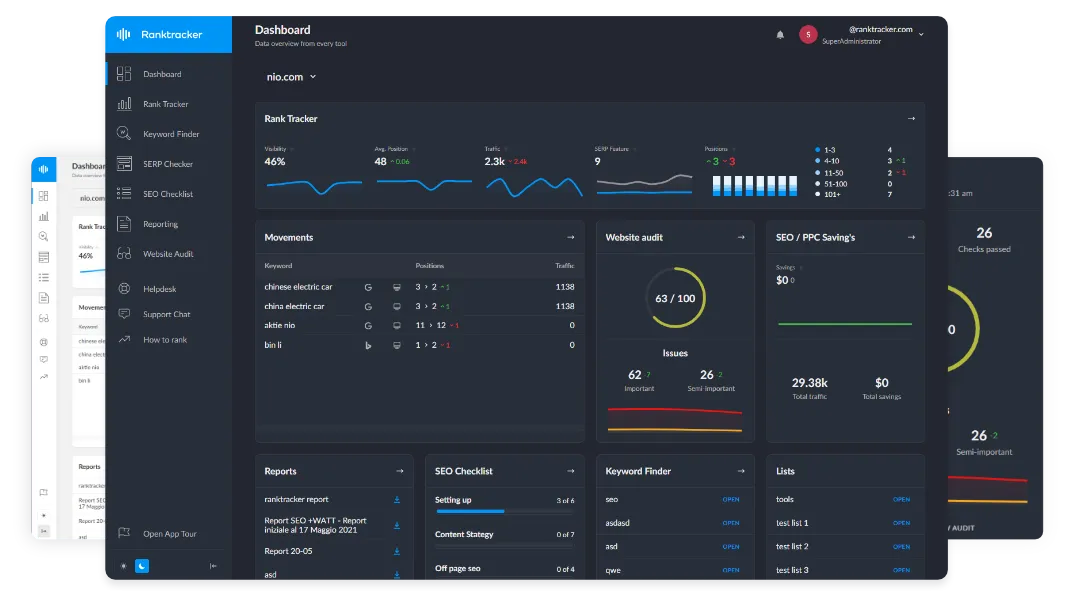
Behind every successful business is a strong SEO campaign. But with countless optimization tools and techniques out there to choose from, it can be hard to know where to start. Well, fear no more, cause I've got just the thing to help. Presenting the Ranktracker all-in-one platform for effective SEO
We have finally opened registration to Ranktracker absolutely free!
Create a free accountOr Sign in using your credentials
Uncovering why a rival domain steals your organic traffic starts with analyzing its structure. Evaluating competitor pages uncovers distinct architectural advantages that standard keyword tracking tools completely overlook during routine audits:
- Identifying latent semantic indexing gaps across primary category pages
- Mapping out internal linking hierarchies that distribute page authority evenly
- Analyzing user engagement signals that indicate long dwell times
Fixing these discrepancies requires moving beyond basic on-page text adjustments. Working alongside experts ensures your site architecture matches what modern search crawlers demand for top-tier search visibility.
Structuring For Long-Term Search Dominance
Search engines reward websites that build clear thematic authority across entire topic clusters rather than isolated landing pages. According to Search Engine Land, modern search optimization relies heavily on understanding how algorithms group related concepts and user intent signals. Ignoring this semantic web leaves your pages vulnerable to competitors who map out complete topical ecosystems for their audiences.
Building a resilient organic footprint takes deliberate planning, technical precision, and consistent execution over multiple quarters. As Webtonic notes, filling content voids proactively prevents competitors from intercepting your target audience during crucial research phases of the buying journey.
When visitors find comprehensive answers in one place, bounce rates drop, and search engines elevate your domain authority. Maintaining this competitive edge requires continuous monitoring of algorithm shifts and search landscape updates.
Reclaiming Organic Search Market Share
Closing visibility gaps requires shifting from reactive publishing to targeted optimization based on real performance data. Once an audit reveals where competitors hold an advantage, site owners can prioritize updates to existing assets while filling systemic content voids.
Modern search engines evaluate how effectively a page guides users from information gathering to resolution. Updating underperforming pages with deeper technical insights, improved formatting, and clearer internal links strengthens domain authority over time.
Reviewing competitive rankings on a regular cadence ensures your domain stays aligned with evolving search engine guidelines and user expectations. Integrating an ongoing SEO audit process into your content workflow transforms competitive intelligence into sustainable organic growth. To explore related topics on technical optimization and performance tracking, check out our other blog posts.