Intro
Most content teams chase volume. They target the big, broad keywords, the ones with tens of thousands of monthly searches, and wonder why their pages sit buried on page four. The answer is almost always the same: high competition, low specificity, and zero alignment with purchase intent. The real opportunity, especially in real-time entertainment, lives somewhere most people never bother to look.

Long-Tail Keywords Are One of the Best Ways to Rank
Ask any SEO expert, and they will tell you that long-tail keywords are one of the best, if not the best, way to rank on search engines. The reason is straightforward. Short, broad keywords like _casino games _or _live sports _carry enormous competition. Thousands of established, high-authority domains are already fighting for those positions, and a newer or mid-tier site has almost no realistic path to the top. Long-tail keywords flip that dynamic entirely.
A long-tail keyword is typically three or more words, highly specific, and tied closely to a user's actual intent at that moment. Search volume is lower, yes, but conversion rates are dramatically higher. Someone searching best live casino with no deposit bonus is not browsing. They are ready to act. That specificity is what makes long-tail targeting so powerful for sites that want traffic that converts, not just traffic that bounces.
This principle applies just as strongly in real-time entertainment as it does in any other vertical. Real-time entertainment (live sports, live casino games, live streaming events, esports tournaments) generates naturally long-tail search behavior. Users are not searching vaguely. They are searching with urgency and precision: watch live NFL game free tonight, best platform to stream UFC right now, or where to bet on live in-play basketball odds. These queries spike in the moment, carry strong intent, and face far less competition than generic head terms. That is an underused goldmine.
Take live esports as a concrete example. A site targeting the keyword _esports will struggle indefinitely. But a page optimized for best platforms to watch live Valorant tournaments 202_6 or _where to find live CS2 match odds tonight _has a genuine shot at ranking well, and more importantly, at attracting users who are already engaged and ready to spend time or money. The keyword is specific, the audience is self-selected, and the competition is manageable. That combination is exactly what long-tail strategy is designed to exploit.
This applies to sweepstakes casino sites, as well. If we look at the best and most reliable platforms in that space, it becomes clear they are not just targeting online casino and hoping for the best. They build content around specific, high-intent queries like top sweepstakes casinos in 2026, and the best guides structure their comparisons and rankings around that kind of search. (source: bestodds.com/sweepstakes guide)
The All-in-One Platform for Effective SEO
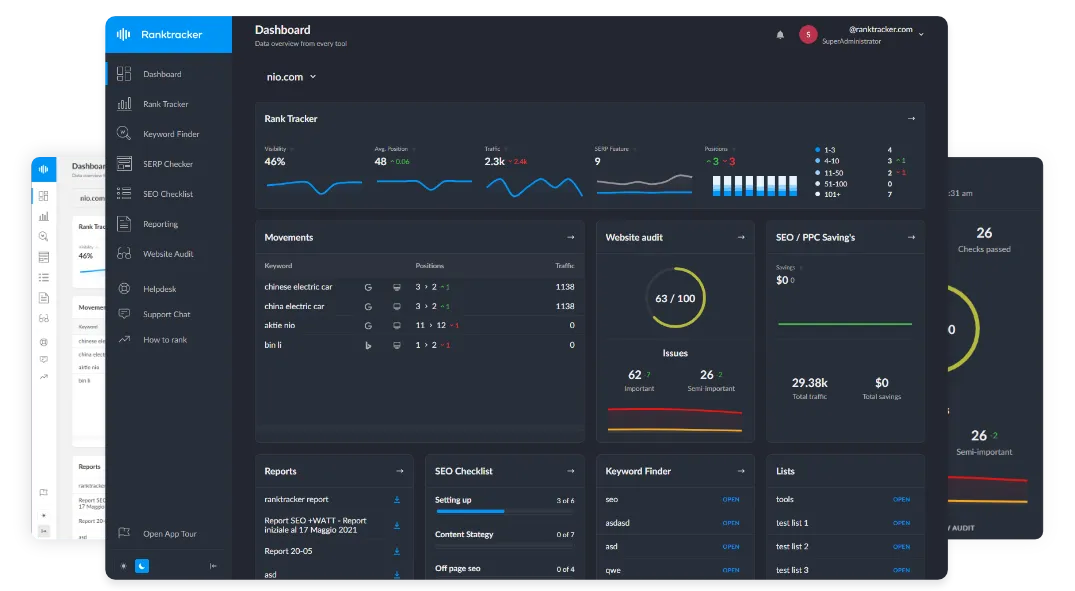
Behind every successful business is a strong SEO campaign. But with countless optimization tools and techniques out there to choose from, it can be hard to know where to start. Well, fear no more, cause I've got just the thing to help. Presenting the Ranktracker all-in-one platform for effective SEO
We have finally opened registration to Ranktracker absolutely free!
Create a free accountOr Sign in using your credentials
Another strong example outside the betting and casino space is live cooking content. A food and recipe platform targeting _recipes _as a keyword will never break through. But a content team that builds around queries like best live cooking shows to watch on streaming right now or how to follow along with live baking competitions 2026 is tapping into real-time search behavior with a fraction of the competition.
These searches happen at specific moments, when someone is sitting on their couch, curious and engaged, looking for something to watch or try. Pages that match that intent precisely earn the click, the session, and eventually the loyal return visitor.
Why Real-Time Entertainment Is a Long-Tail Keyword Goldmine
Real-time entertainment is uniquely positioned to benefit from long-tail SEO because its audience is inherently moment-driven. People searching for live content are not doing casual research. They have a specific interest, a specific time window, and a specific action they want to take. That mindset produces highly specific searches, and highly specific searches are the foundation of long-tail keyword strategy.
Live sports betting is a clear example of this pattern. During a major game, search queries around live betting odds, real-time score updates, and in-play wagering options spike sharply.
These are not evergreen queries with steady monthly volume; they are short-lived, high-intent spikes that reward sites prepared with the right content. Pages that rank for_ live in-play NBA betting odds tonight _during a playoff run will capture a concentrated burst of highly motivated traffic that generic pages will never see.
The same logic applies to live streaming platforms, live music events, virtual sports, and even live financial markets. Each of these verticals generates moment-specific search behavior that most content teams completely ignore because the monthly search volume looks low in a keyword tool. Those tools don't show conversion rate, timing correlation, or the compounding effect of ranking for dozens of these terms at once.
How to Build a Content Strategy Around Real-Time Long-Tail Terms
The first step is shifting how you think about keyword research. Stop filtering exclusively by volume and start filtering by intent. A keyword with 400 monthly searches and clear purchase or engagement intent is worth more than a 40,000-search term with no clear next action attached to it.
Map your content to real-time triggers. In entertainment, those triggers are schedules, events, seasons, and releases. A site covering live sports should build pages around upcoming fixtures, specific betting markets for those fixtures, and platform comparisons tied to those events—months before they happen. That preparation lets a page rank by the time the search spike arrives.
Internal linking also plays a critical role. Long-tail pages should connect back to broader pillar content, and pillar content should funnel users toward the specific, high-intent pages. This structure tells search engines your site has depth and authority across a topic, strengthening rankings across the board, not just for individual pages.
The Cost of Ignoring This Strategy
Every month spent targeting only broad, competitive keywords is a month of traffic and revenue left on the table. The sites winning in real-time entertainment right now are not necessarily the ones with the biggest budgets or the oldest domains. They understood early that specificity is a competitive advantage and built their content calendars accordingly.
Long-tail keyword strategy in real-time entertainment is not a secondary tactic. It is the primary path to consistent, compounding organic growth for any site that cannot outspend the giants in its space. The searches are there, the intent is there, and the competition gap is wide open. The only question is whether your content is positioned to capture it.