Intro
SaaS SEO is not easy to break into.
Most software markets are already crowded with comparison sites, review platforms, affiliate pages, established competitors, and companies that have been investing in content for years. Even if your product is better, that does not automatically mean your pages will rank.
You need strong content, a clear keyword strategy, good technical SEO, and backlinks that actually fit your market.
That is where SaaS niche edits can help.
For software companies that want more relevant placements, BuyNicheEdits offers SaaS niche edits on pages connected to software, business, technology, startups, and B2B topics. The value is not just in getting another backlink. It is in getting a link from an existing page where the context makes sense.
A niche edit is a backlink added into an article that already exists. Instead of publishing a brand-new guest post, your link is placed inside relevant content that is already live. For SaaS companies, this can work well when you want to support product pages, comparison pages, integration pages, or useful guides that already form part of your SEO strategy.
The All-in-One Platform for Effective SEO
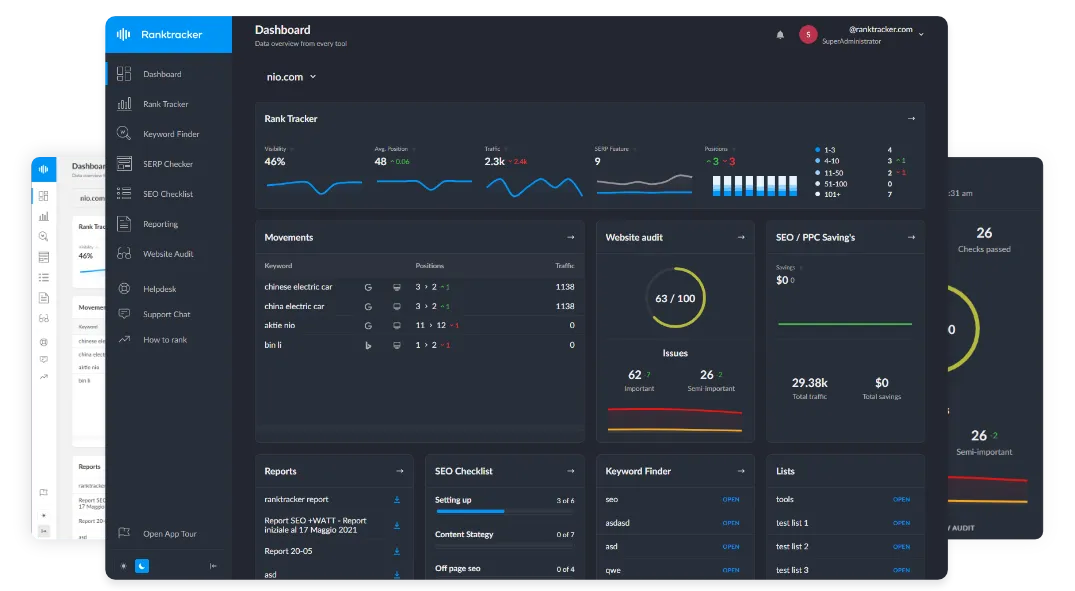
Behind every successful business is a strong SEO campaign. But with countless optimization tools and techniques out there to choose from, it can be hard to know where to start. Well, fear no more, cause I've got just the thing to help. Presenting the Ranktracker all-in-one platform for effective SEO
We have finally opened registration to Ranktracker absolutely free!
Create a free accountOr Sign in using your credentials
The key is relevance.
A link to a SaaS product from an article about workflow automation, CRM systems, remote teams, customer support, cybersecurity, cloud hosting, or marketing operations feels natural. A link from an unrelated lifestyle blog usually does not.
What are SaaS niche edits?
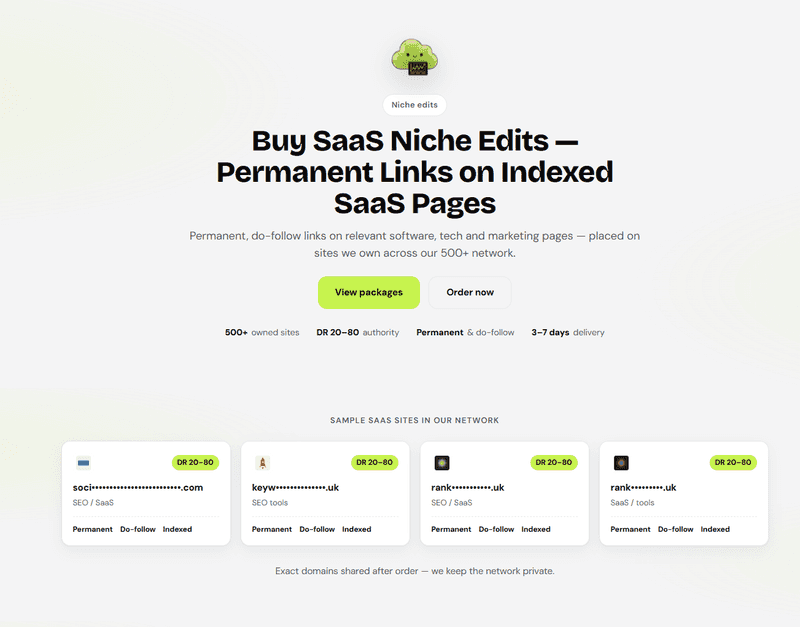
SaaS niche edits are contextual backlinks placed into existing content on websites related to software, technology, startups, business, productivity, marketing, cloud tools, or the specific market your product serves.
For example, a SaaS niche edit might be added to an article about:
Project management tools CRM software Customer onboarding Marketing automation Remote team workflows Cybersecurity software Cloud infrastructure Sales pipeline management AI tools for business Small business software
The link should sit naturally inside the article. It might point readers toward a useful tool, a comparison page, a guide, an integration page, or a resource that expands on the topic.
The All-in-One Platform for Effective SEO
Behind every successful business is a strong SEO campaign. But with countless optimization tools and techniques out there to choose from, it can be hard to know where to start. Well, fear no more, cause I've got just the thing to help. Presenting the Ranktracker all-in-one platform for effective SEO
We have finally opened registration to Ranktracker absolutely free!
Create a free accountOr Sign in using your credentials
This is different from a guest post. With a guest post, a new article is written and published from scratch. With a niche edit, the link is added to an existing page. Both can work, but they are not the same strategy. If you are comparing the two, Ranktracker has a useful guide on niche edits vs guest posts that explains when each option makes more sense.
For SaaS brands, niche edits are useful because many of the pages you want to strengthen are already live. You might already have a strong alternative page, a product comparison, a use-case landing page, or a free tool. A relevant niche edit can help support that page without needing a new article every time.
Why SaaS link building needs a different approach
SaaS buyers rarely sign up after one search.
They compare tools. They read reviews. They check integrations. They search for alternatives. They look for pricing, templates, workflows, and use cases that match their business.
That means SaaS SEO is not only about ranking for one big keyword. It is about appearing at different points in the buyer journey.
Someone might start with a broad search like “best project management software.” Later, they may search for “Asana alternative,” “project management software for agencies,” “client approval workflow tool,” or “how to track team workload.”
Each of those searches has a different intent, but all of them can lead toward the same product.
This is why SaaS link building needs to be planned carefully. If every backlink points to the homepage, the campaign can become too shallow. Most SaaS companies need backlinks to a mix of pages, including:
Feature pages Use-case pages Industry pages Alternative pages Comparison pages Integration pages Template pages Free tools Educational blog posts
A good niche edit helps strengthen the page that best matches the searcher’s intent.
For example, if you sell email automation software, a link from an article about improving lifecycle email campaigns makes sense. If you sell cybersecurity software, a link from a guide about protecting business data makes sense. If you sell hosting or cloud infrastructure software, a link from a technical article about uptime, speed, or server management makes sense.
That context gives the backlink a reason to exist.
What makes a good SaaS niche edit?
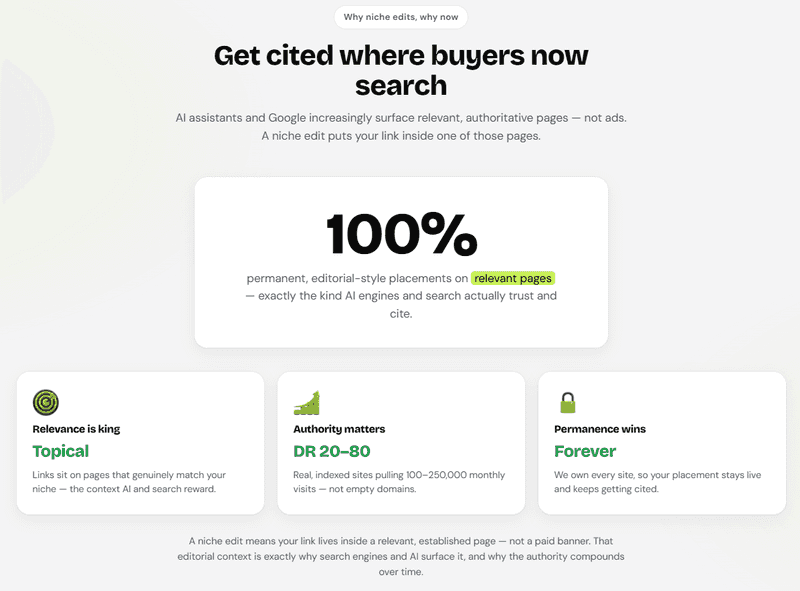
A good niche edit should read like it was always meant to be there.
The paragraph should make sense. The anchor text should not feel awkward. The page you link to should be genuinely useful for the reader. If someone clicks the link and thinks, “Yes, that fits,” you are on the right track.
A poor niche edit does the opposite. It forces a keyword into a random sentence, links to a page that does not match the topic, or appears on a site that has no real connection to your industry.
For SaaS, the best niche edits usually have four things in common: topical relevance, natural anchor text, a strong destination page, and a real publisher.
The article should already match the topic
Relevance is the most important part.
A high-authority website is not automatically a good link opportunity if the article has nothing to do with your product or audience. SaaS links work best when the surrounding content is connected to the problem your product solves.
For example:
A CRM platform could fit inside an article about sales follow-up A help desk platform could fit inside a guide about reducing support tickets An SEO tool could fit inside content about keyword tracking or backlinks A payroll tool could fit inside a small business finance guide A cloud security product could fit inside a cybersecurity checklist A hosting platform could fit inside a guide about website performance
This is also where the wider niche edits cluster becomes useful. A SaaS company might not only need SaaS links. Depending on the product, it may also benefit from links in related areas such as technology niche edits, cybersecurity niche edits, fintech niche edits, or hosting niche edits.
The right category depends on what the software actually does.
A generic SaaS link is useful. A SaaS link that also matches the product category is even better.
The anchor text should not feel forced
Anchor text can help search engines understand the page you are linking to, but it is easy to overdo it.
If every backlink uses the same exact-match phrase, the pattern can look unnatural. SaaS brands usually need a mix of exact-match, partial-match, branded, URL, and natural anchors.
For example, a SaaS campaign might use anchors like:
SaaS niche edits software link building workflow automation platform project management software this customer onboarding guide BrandName https://www.example.com/
The best anchor is the one that fits the sentence.
If an article is talking about software companies building links, “SaaS niche edits” may fit naturally. If the article is explaining a workflow, a softer anchor like “this automation guide” might read better. If the page is already heavily optimised, a branded anchor may be safer.
Before choosing anchors, it helps to know which keywords matter. Ranktracker’s Keyword Finder can help you find SaaS keywords with useful search volume, realistic competition, and the right intent.
The page you link to should deserve the link
Backlinks work best when the destination page is already strong.
If the page is thin, unclear, or badly matched to search intent, more links may not solve the problem. A strong SaaS page should explain the product clearly, answer the searcher’s question, and make the next step obvious.
Good SaaS link targets often include:
Alternative pages Comparison pages Feature pages Integration pages Use-case pages Industry landing pages Free tools Templates Original research Detailed educational guides
For example, a link to a strong “best CRM for agencies” page can make sense if the page genuinely compares options, explains use cases, and helps the reader make a decision. A link to a weak sales page with two paragraphs of copy is much less convincing.
Before building links, it is worth checking the page itself. Ranktracker’s Website Audit can help identify issues like missing metadata, broken links, crawl problems, duplicate content, and weak technical foundations.
Links can help a good page compete. They cannot fully rescue a page that does not satisfy the search intent.
The publisher should look real
A good SaaS niche edit should come from a site that appears to have a real audience and a real reason to publish on the topic.
For SaaS, relevant publishers might include:
Software blogs Startup publications B2B marketing sites Technology websites Business blogs Productivity blogs Developer resources Cloud and hosting sites Industry-specific blogs Review and comparison sites
You do not always need the biggest site. Sometimes a smaller but focused website is a better match than a large generic publisher that covers every topic imaginable.
What matters is whether the placement feels believable.
If the site has thin content, random categories, obvious link selling patterns, and no clear topical direction, it may not be the best option. A useful niche edit should sit inside content that has a reason to exist beyond selling links.
SaaS niche edits vs guest posts
SaaS companies often use both niche edits and guest posts, but they are useful in different ways.
Guest posts are useful when you want to publish a new piece of content, control the angle, or build thought leadership around a specific topic. Niche edits are useful when you want to place a link into existing content that already has relevance.
For example, a guest post might work well if you want to write about a new trend in customer success, AI automation, or SaaS pricing. A niche edit might work better if you already have a strong guide and want to place it inside an existing article about that topic.
For SaaS SEO, niche edits are often useful when:
You want to strengthen an existing page You want the link to sit inside already-published content You want more relevance around a product, comparison, or use-case page You want to diversify your backlink profile You do not need a new article written from scratch
Guest posts still have a place. But if your goal is to support a page that already exists, a niche edit can be more direct.
For a broader breakdown of this strategy, you can also read our guide on link building niche edits, which looks at how contextual placements fit into a wider backlink campaign.
How to plan a SaaS niche edit campaign
A good SaaS niche edit campaign should start with your pages, not with a random list of websites.
First, choose the pages that matter most. These are usually pages with commercial value or pages that help move visitors closer to a trial, demo, signup, or purchase.
You might choose:
A competitor alternative page A product comparison page A feature page A use-case landing page An integration page A free tool A template A high-value guide
Then map each page to keywords. A feature page might target a product-specific term. A comparison page might target “best X software.” An alternative page might target competitor searches. A guide might target an informational keyword that introduces people to the problem your product solves.
Once you know the target keywords, use Rank Tracker to record where the pages currently rank. This gives you a baseline before any new links go live.
You can then use SERP Checker to review what is already ranking. This is important because SaaS SERPs can vary a lot. Some results are dominated by listicles. Others prefer product pages, comparison pages, guides, or review-style content.
If your page does not match the intent of the SERP, links may only take it so far.
How to choose the right related niche edit categories
SaaS overlaps with a lot of other markets, so the best link category is not always just “SaaS.”
A marketing automation tool may also fit naturally into digital marketing niche edits or email marketing niche edits. An SEO platform may fit into SEO niche edits. An AI software product may fit into AI search niche edits or broader technology content.
The same applies to more specialised SaaS products.
A payment platform may fit fintech content. A cloud platform may fit hosting content. A security product may fit cybersecurity content. An ecommerce tool may fit ecommerce content. An ad platform may fit PPC content. An affiliate platform may fit affiliate marketing content.
This is why SaaS link building should not be boxed into one category. The better approach is to match the link opportunity to the actual product, audience, and page you are trying to rank.
A broad SaaS placement can be useful, but a placement in the exact market your buyer cares about is often stronger.
How to track SaaS niche edit results
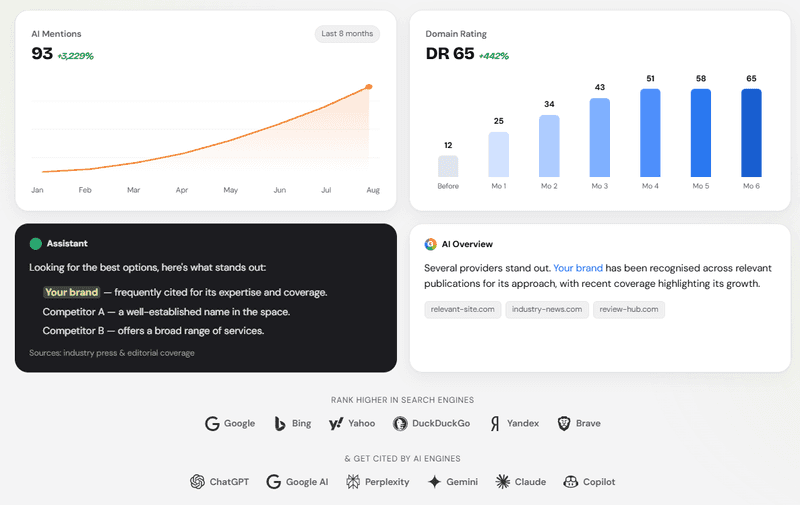
A niche edit campaign should not end when the link goes live.
You need to monitor what happens next.
At a minimum, SaaS companies should track:
Whether the backlink stays live Whether the linking page remains indexed Whether the anchor text is correct Whether the target page starts moving Whether impressions increase Whether competitors are also moving Whether the SERP changes over time
Ranktracker’s Backlink Monitor can help you keep track of backlinks after they are placed. This matters because links can be removed, pages can be edited, URLs can change, and some pages can drop out of the index.
You should also track the rankings attached to each target page. A single niche edit may not instantly move a competitive SaaS keyword, but several relevant links combined with better content and internal linking can make a difference over time.
Rank tracking gives you the evidence. Without it, you are guessing.
You can also use Backlink Checker to review competitor backlink profiles and understand what kinds of links are helping similar SaaS pages rank. This can show whether competitors are getting links from review sites, industry blogs, technology publications, integrations pages, or comparison content.
Common SaaS niche edit mistakes
The biggest mistake is treating niche edits like a numbers game.
More links are not always better. Better links are better.
A SaaS company can build dozens of backlinks and still see little movement if the links are irrelevant, the anchors are too aggressive, or the target pages do not match search intent.
Common mistakes include:
Sending every link to the homepage Using exact-match anchors too often Building links to weak pages Choosing sites only because they have high DR Ignoring whether the page is indexed Forcing SaaS links into unrelated content Not checking competitor SERPs Forgetting internal links Not tracking rankings before and after placement
Internal linking is especially important. If you build external links to a guide, that guide should link naturally to related product, feature, comparison, and use-case pages. That helps users move through your site and helps authority flow to pages that matter.
This is also why it makes sense to connect related articles across the niche edit series. A SaaS article can naturally point readers toward related topics like technology, SEO, digital marketing, AI search, cybersecurity, fintech, or hosting when those markets overlap.
The goal is not to add links for the sake of it. The goal is to help readers move to the next relevant resource.
Where SaaS niche edits fit into a wider SEO strategy
SaaS niche edits are useful, but they should not be the whole strategy.
The strongest SaaS SEO campaigns usually combine:
Clear product positioning Useful product-led content Comparison and alternative pages Technical SEO improvements Internal linking Relevant backlinks Rank tracking Competitor analysis Content updates
Niche edits can help strengthen the pages that already deserve to rank. They can add external relevance, support commercial pages, and help your site compete in SERPs where other brands already have strong backlink profiles.
But the page still has to do its job.
If someone lands on your SaaS page and the content is weak, confusing, or too vague, the backlink has only solved part of the problem. The page still needs to convert interest into action.
The All-in-One Platform for Effective SEO
Behind every successful business is a strong SEO campaign. But with countless optimization tools and techniques out there to choose from, it can be hard to know where to start. Well, fear no more, cause I've got just the thing to help. Presenting the Ranktracker all-in-one platform for effective SEO
We have finally opened registration to Ranktracker absolutely free!
Create a free accountOr Sign in using your credentials
That is why the best SaaS link building campaigns are not separate from the rest of SEO. They are tied into keyword research, content planning, technical fixes, internal linking, and performance tracking.
Final thoughts
SaaS niche edits can help software companies build backlinks that feel more relevant, more natural, and more connected to the buyer journey.
The best placements come from pages that already discuss software, business problems, technology, marketing, productivity, cybersecurity, hosting, finance, or the specific industry your product serves. The more closely the placement matches the product and audience, the stronger the link context becomes.
If you want to explore relevant placements for software companies, you can start with SaaS niche edits from BuyNicheEdits.
After your placements go live, use Ranktracker to monitor keyword movement, backlink discovery, SERP changes, and organic performance. That way, you are not just building links. You are seeing whether those links are helping the right SaaS pages move in the right direction.