
Intro
Technology SEO is broad, but that is also what makes it difficult.
A software company, cybersecurity platform, hosting provider, AI tool, app developer, gadget blog, cloud service, and ecommerce tech brand may all sit under the “technology” umbrella. But they do not all need the same links.
That is where many tech link building campaigns go wrong. They chase general technology backlinks without asking whether the article, audience, and target page actually fit together.
For technology companies that want more relevant placements, BuyNicheEdits offers technology niche edits on pages connected to software, SaaS, AI, cybersecurity, hosting, gadgets, apps, web development, digital marketing, and business technology.
The goal is not just to build more backlinks. It is to build links from existing articles where the context makes sense.
A niche edit is a backlink added into content that is already live. Instead of writing a new guest post, your link is placed inside an existing page. When that page already discusses a related technology topic, the link feels more natural and useful.
The All-in-One Platform for Effective SEO
Behind every successful business is a strong SEO campaign. But with countless optimization tools and techniques out there to choose from, it can be hard to know where to start. Well, fear no more, cause I've got just the thing to help. Presenting the Ranktracker all-in-one platform for effective SEO
We have finally opened registration to Ranktracker absolutely free!
Create a free accountOr Sign in using your credentials
For a tech company, that might mean a link from an article about cloud infrastructure, app development, AI tools, SaaS platforms, cybersecurity risks, web hosting, automation, business software, or product comparisons.
A technology link inside that kind of content makes sense. A technology link forced into a random unrelated article usually does not.
What are technology niche edits?
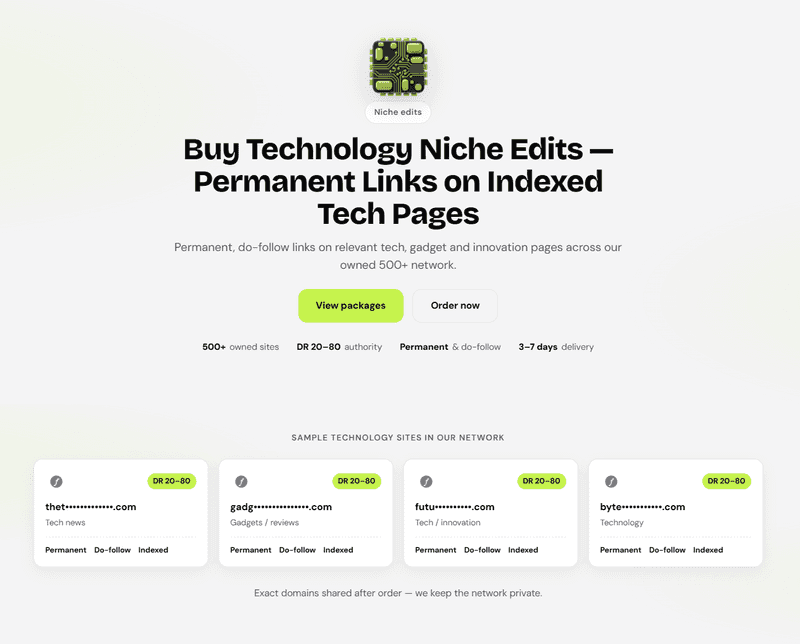
Technology niche edits are contextual backlinks placed into existing articles on websites related to tech, software, SaaS, cybersecurity, AI, hosting, gadgets, mobile apps, web development, cloud tools, business systems, or digital infrastructure.
A technology niche edit might be placed inside an article about:
Software tools Cloud platforms AI products Cybersecurity Mobile apps Web hosting SaaS platforms Developer tools Gadgets and devices Business technology Automation Data management Web development Digital transformation
The link should fit naturally inside the article. It might point to a product page, software comparison, technical guide, SaaS landing page, app page, developer resource, case study, or educational article.
The All-in-One Platform for Effective SEO
Behind every successful business is a strong SEO campaign. But with countless optimization tools and techniques out there to choose from, it can be hard to know where to start. Well, fear no more, cause I've got just the thing to help. Presenting the Ranktracker all-in-one platform for effective SEO
We have finally opened registration to Ranktracker absolutely free!
Create a free accountOr Sign in using your credentials
This is different from a guest post. A guest post is a new article written and published for the campaign. A niche edit is added to a page that already exists. Both can work, but they are useful in different ways. Ranktracker has a full guide on niche edits vs guest posts if you want to compare both approaches.
For technology brands, niche edits are often useful because many important pages are already live. You might already have a SaaS product page, hosting comparison, cybersecurity guide, AI tool landing page, app store support page, or technical resource that needs more authority.
A relevant niche edit can help support that page without needing to publish a new article every time.
Why technology link building needs better context
Technology is too broad to treat as one simple category.
A backlink from a gadget review site might be useful for a consumer electronics brand, but not for a B2B cybersecurity platform. A cloud hosting article might be perfect for a VPS provider, but not for a mobile fitness app. A SaaS marketing article might work well for a software product, but not for a hardware review page.
The link needs to match the page.
For example:
A SaaS tool fits naturally inside software, business, or productivity content. A cybersecurity platform fits inside security, compliance, or data protection content. A hosting provider fits inside web hosting, performance, or infrastructure content. An AI tool fits inside AI, automation, SEO, or business technology content. A mobile app fits inside app, gadget, mobile, or lifestyle technology content. A web development service fits inside development, UX, design, or digital marketing content.
This is why technology campaigns often overlap with SaaS niche edits, cybersecurity niche edits, AI search niche edits, hosting niche edits, web design niche edits, and business niche edits.
A broad technology placement can be useful. But a link from a page that matches the product, use case, or buyer intent is usually stronger.
That is what makes the placement feel real.
What makes a good technology niche edit?
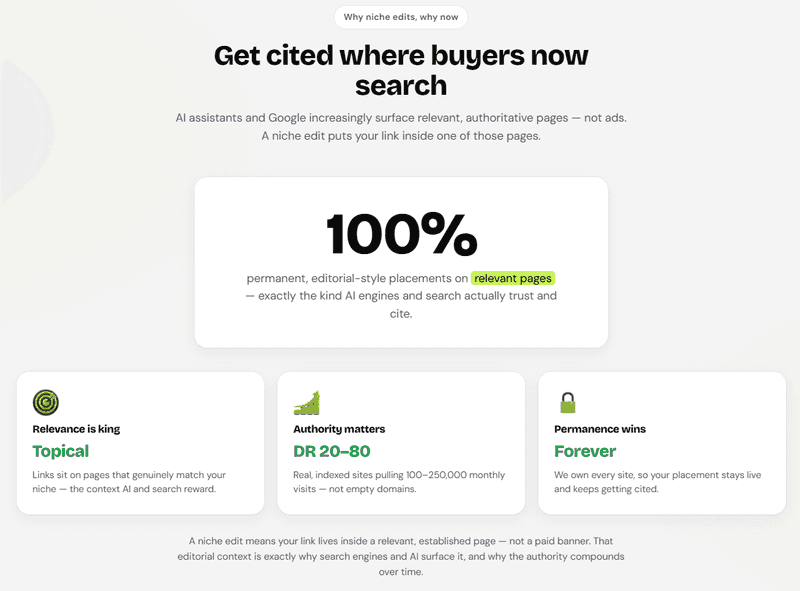
A good technology niche edit should read naturally inside the article.
The surrounding paragraph should already be discussing a related topic. The anchor text should not feel forced. The destination page should help the reader understand, compare, or solve something.
A weak placement usually has the opposite problem. The article is unrelated, the anchor is too commercial, or the target page does not match what the reader is looking for.
Strong technology niche edits usually have four things in common: topic fit, natural anchor text, a useful destination page, and a suitable publisher.
The article should match the technology topic
A technology backlink should be relevant at the page level, not just the domain level.
A large tech website may cover many different subjects. One article might be about cybersecurity, another about smartphones, another about SaaS tools, and another about cloud hosting. Those pages are not equally useful for every link target.
The article itself needs to match the page you want to rank.
For example, if you are building links to a cloud hosting page, articles about uptime, server performance, website speed, WordPress hosting, or infrastructure are strong fits.
If you are building links to an AI tool, articles about automation, AI search, productivity, machine learning, or digital marketing may be more relevant.
If you are building links to a cybersecurity page, the best placements will usually come from content about phishing, data security, compliance, passwords, cloud protection, or threat detection.
This is why a smaller but focused article can sometimes be more valuable than a big generic placement. Relevance gives the link a reason to be there.
The anchor text should sound natural
Technology anchor text can become awkward when it is too keyword-heavy.
A sentence should not be ruined just to force in a commercial phrase. Search engines may use anchor text as a signal, but readers still need the sentence to make sense.
A healthier technology link profile uses a mix of exact-match, partial-match, branded, URL, and natural anchors.
For example, a technology campaign might use anchors like:
Technology niche edits business software tools cloud hosting platform cybersecurity guide this AI search resource BrandName https://www.example.com/
The right anchor depends on the article and target page.
If the article is about technology link building, “technology niche edits” may fit naturally. If the article is about cloud infrastructure, “cloud hosting platform” may read better. If the article is about AI-driven search, “this AI search resource” might feel more natural than a forced keyword.
Before choosing anchors, it helps to know which keywords matter. Ranktracker’s Keyword Finder can help identify technology keywords, compare difficulty, and find terms that match the right search intent.
The target page should be useful enough to earn the link
Backlinks work best when the target page is already strong.
Technology SERPs can be very competitive. A thin product page or vague technical guide may struggle even with links. The page needs to match the search intent and give the reader something useful.
Good technology link targets often include:
SaaS product pages Software comparison pages Cybersecurity guides Cloud hosting pages AI tool pages Mobile app pages Developer resources Technical tutorials Case studies Technology reports Gadget reviews Business technology guides Web development service pages
The target page should clearly answer the user’s question.
If someone lands on a hosting comparison page, they should be able to compare performance, pricing, support, features, and use cases. If they land on a cybersecurity guide, it should explain risks and solutions clearly. If they land on an AI tool page, it should quickly show what the tool does and who it is for.
Before building links, it is worth checking whether the page has technical problems. Ranktracker’s Website Audit can help identify crawl issues, broken links, missing metadata, duplicate content, and other problems that can limit performance.
A relevant niche edit can help a strong technology page compete. It cannot fully fix a page that is unclear, outdated, or misaligned with search intent.
The publisher should make sense
A good technology niche edit should come from a site that has a real reason to publish about tech.
That does not mean the site has to be a huge technology publication. A smaller, focused website can still be useful if the article is relevant and the audience fits.
A suitable publisher might be:
A technology blog A SaaS website A cybersecurity publication A hosting resource A developer blog A gadget review site A mobile app blog A business technology website An AI tools site A web development publication A digital marketing blog A startup resource
The publisher should not feel random.
If the site covers technology, software, digital tools, business systems, or online infrastructure, a technology link can make sense. If the site has no connection to the topic, the link may feel forced.
The question is simple: would this article naturally mention your page?
If the answer is yes, the placement is much stronger.
Technology niche edits vs guest posts
Technology companies can use both niche edits and guest posts.
Guest posts are useful when you want to publish a new article, explain a technical concept, or control the angle. For example, a guest post might work well for a piece about AI trends, cybersecurity risks, SaaS growth, web hosting performance, or app development.
Niche edits are useful when you want to add a link into an existing article that already has the right context. This can be more direct when your target page is already live and simply needs more relevant authority.
For technology SEO, niche edits can work well when:
You want to support an existing product or service page You want a link inside already-relevant tech content You want to diversify beyond guest posts You want to strengthen pages that already have rankings or impressions You want contextual links to guides, tools, or comparison pages
Guest posts still have value, especially for thought leadership and brand visibility. But if the page already exists and the goal is to support it with relevant authority, a niche edit can be a practical option.
For a broader explanation of contextual placements, read our guide to link building niche edits.
How to plan a technology niche edit campaign
A good technology niche edit campaign starts with the pages you want to grow.
Do not start by asking how many links you can build. Start by choosing the pages that have the strongest ranking and business value.
For a technology company, that might include:
A software product page A SaaS comparison page A cloud hosting page A cybersecurity guide An AI tool landing page A developer resource A mobile app page A technical tutorial A business technology guide A case study A product comparison article
Once you choose the target pages, map each one to the keywords it should rank for. A SaaS page may target software terms. A hosting page may target infrastructure or performance keywords. A cybersecurity guide may target security questions. An AI tool page may target automation, AI search, or productivity keywords.
Then use Rank Tracker to record current positions before new links go live. This gives you a baseline for measuring movement.
You can also use SERP Checker to review what kind of pages already rank. Technology SERPs can vary a lot.
Some are dominated by SaaS tools. Some show product comparisons. Some favour technical tutorials. Some rank review pages. Some show documentation or developer resources. Some reward news or fresh trend-led content.
If your page does not match what the SERP is rewarding, backlinks may only help to a point. The content may need to be improved before link building can make a real difference.
How to choose related niche edit categories
Technology overlaps with many other industries, so related niche edit categories can be useful when they match the page.
A SaaS product may fit SaaS niche edits. A security platform may fit cybersecurity niche edits. An AI visibility tool may fit AI search niche edits. A hosting company may fit hosting niche edits. A web development company may fit web design niche edits. A B2B software product may also connect with business niche edits.
The category should follow the target page.
For example:
A cloud hosting page should lean toward hosting, technology, and web development content. A cybersecurity product should lean toward cybersecurity and technology content. An AI software page should lean toward AI search, SaaS, and technology content. A business software page should lean toward SaaS, business, and productivity content. A web development page should lean toward technology, web design, and digital marketing content.
This creates a more natural backlink profile because the links reflect the real subject of the page.
The goal is not to use every related niche. The goal is to choose the most relevant context for each page.
How to track technology niche edit results
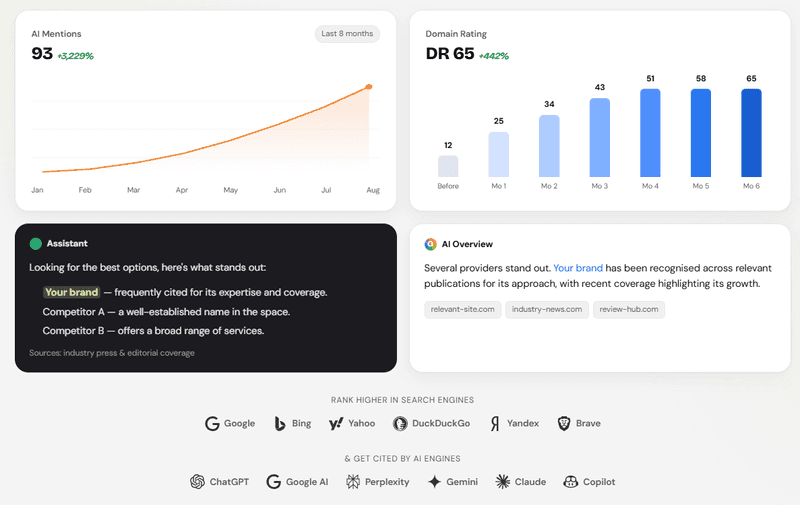
Technology SEO should be tracked carefully because rankings can shift for several reasons.
A page may move because of backlinks, but it may also move because competitors updated content, product categories changed, search intent shifted, new tools entered the market, or SERP features changed.
At a minimum, technology companies should track:
Whether the backlink stays live Whether the linking page remains indexed Whether the anchor text is correct Whether target keywords improve Whether impressions increase Whether competitors are moving Whether SERP layouts change Whether organic traffic improves
Ranktracker’s Backlink Monitor can help you track whether placed links remain live and unchanged. This matters because publishers can edit content, change anchors, remove links, or update older articles.
Ranktracker’s Backlink Checker can help you study competitor backlink profiles. In technology SEO, this can show whether competitors are earning links from SaaS blogs, technical guides, review sites, developer resources, news articles, partner pages, or comparison content.
Then use Rank Tracker to monitor the keywords connected to each target page. One niche edit may not move a competitive technology keyword by itself, but several relevant placements combined with better content and internal links can make a measurable difference over time.
Tracking helps you understand which pages are gaining traction and which still need work.
Common technology niche edit mistakes
The biggest mistake is treating “technology” as a single niche.
A tech link is not automatically relevant just because the article mentions software or innovation. The article still needs to match the target page.
Common mistakes include:
Building links from loosely related tech articles Using exact-match anchors too often Sending too many links to the homepage Ignoring the difference between SaaS, cybersecurity, hosting, AI, and apps Linking to thin or unclear product pages Choosing publishers only by DR or traffic Ignoring whether the linking page is indexed Not checking the SERP before building links Not tracking rankings before and after placement Forgetting internal links between related technology resources
Internal linking is especially important for technology websites. If you build external links to a cloud hosting guide, that guide should connect naturally to related hosting pages, technical resources, speed guides, and comparison pages. If you build links to a cybersecurity page, it should connect to related security guides, product features, and compliance content.
For SEO definitions around backlinks, anchor text, topical authority, crawlability, and search intent, Ranktracker’s SEO Glossary is a useful supporting resource.
Where technology niche edits fit into a wider SEO strategy
Technology niche edits should support a wider SEO strategy.
The strongest technology SEO campaigns usually combine:
Clear product positioning Useful technical content Comparison and alternative pages Technical SEO improvements Strong internal linking Relevant backlinks Competitor analysis Keyword tracking Regular content updates
Niche edits can help strengthen important pages, but the pages still need to deserve visibility.
If a product page is vague, a technical guide is outdated, or a comparison page does not help users decide, links may not be enough. Technology users expect clarity. They want to know what the product does, how it works, who it is for, and why it is better than the alternatives.
A good niche edit adds authority. A good SEO strategy makes sure that authority supports a page that can actually rank and convert.
The All-in-One Platform for Effective SEO
Behind every successful business is a strong SEO campaign. But with countless optimization tools and techniques out there to choose from, it can be hard to know where to start. Well, fear no more, cause I've got just the thing to help. Presenting the Ranktracker all-in-one platform for effective SEO
We have finally opened registration to Ranktracker absolutely free!
Create a free accountOr Sign in using your credentials
That is why technology companies should connect link building to content quality, technical SEO, internal links, keyword research, and performance tracking.
Final thoughts
Technology niche edits can help tech companies build backlinks that actually fit their market instead of relying on random placements.
The best links come from pages that already discuss software, SaaS, cybersecurity, AI, hosting, web development, gadgets, business technology, or digital tools. The closer the article matches the page you want to rank, the stronger the context becomes.
If you want to explore relevant placements for technology websites, you can start with technology niche edits from BuyNicheEdits.
After your placements go live, use Ranktracker to monitor keyword movement, backlink discovery, SERP changes, and organic performance. That way, you are not just building links. You are tracking whether those links are helping the right technology pages move in the right direction.

